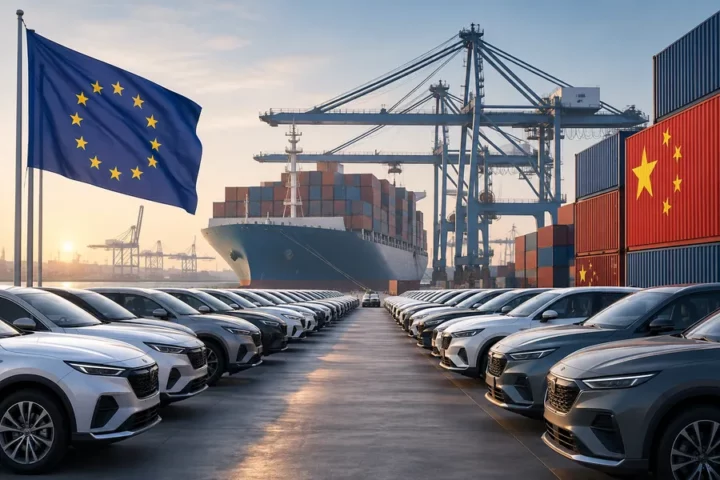
The European Union is set to limit imports of plug-in hybrid cars from China to 350,000 a year, the Guardian reports, citing confirmation from the European Commission. According to the newspaper, the cap will take effect in December 2026 as part of a four-year trade agreement. It is not yet an enforceable restriction.
The report, published on 12 October, says the agreement was reached in Beijing the previous week. It covers plug-in hybrid electric vehicles, known as PHEVs: cars combining combustion engines and electric motors, with batteries that can be charged from an external power source. The cap does not apply to all types of hybrid or to all electric cars.
Where a car is made will matter, not its brand
Under the rules described by the Guardian, the restriction will also cover cars manufactured in China by EU companies. However, officials quoted by the newspaper say it will not apply to Chinese cars produced or assembled in the EU. The distinction is important: whether a vehicle falls within the cap will depend on where it is made, rather than its brand alone.
The mechanism will also work differently from an additional tariff. Cars imported above the annual limit are to be held during customs clearance at European ports. According to the newspaper, the restriction will be implemented using safeguard measures under World Trade Organization (WTO) rules.
Chinese concessions on other products
The agreement extends beyond finished cars. The Guardian reports that China has agreed to remove some tariffs on car parts and halve tariffs on footwear, olive oil and ice cream from the EU. According to officials cited in the article, Beijing supports the agreed cap, while talks on cars and other product groups are set to continue.
The announced start date for the cap is December 2026; the newspaper does not specify a day. At this stage, the arrangements concern future imports into the EU and should not be treated as restrictions already being applied when cars clear customs.