Contents
MOT, road tax and insurance are three familiar words in British motoring, but they cover three very different obligations. A taxed and insured car can still be illegal to use if its MOT has expired. And passing the MOT does not mean you can forget your vehicle tax.
Even the name is a little piece of British history. MOT stands for Ministry of Transport, the former name of a government department. The name stuck and now refers to the statutory roadworthiness test. Think of it as a safety and emissions check, not a service appointment. An MOT does not change your engine oil, fix worn parts or promise that your car will never break down.
When does a car need its first MOT?
In England, Scotland and Wales, a normal private car generally needs its first MOT by the third anniversary of its registration and then every year. Some types of vehicle, including taxis, follow different rules. Northern Ireland operates a separate testing system, so its dates and booking arrangements need checking independently.
For example, a car first registered on 20 November 2023 would normally need its first MOT by 20 November 2026. You do not have to leave a renewal to the last day. For an existing MOT, testing up to one month minus one day before expiry usually lets you keep the original annual renewal date. You can check the date and previous results using GOV.UK’s MOT history service.
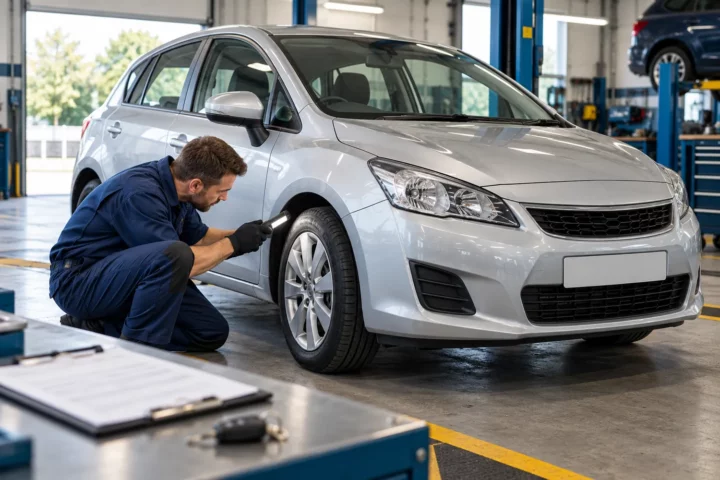
During the test, the examiner looks at safety-related items such as brakes, lights, tyres, suspension, seat belts and emissions. The engine’s internal condition, clutch and gearbox are not tested. So a used-car advert promising “12 months MOT” is reassuring only up to a point: it does not replace a proper check of the vehicle’s overall condition. What the MOT actually covers.
How much does an MOT cost, and what happens if you fail?
As of 8 October 2026, the maximum fee for a standard car MOT in Great Britain is £54.85, or £29.65 for a standard motorcycle. Garages can charge less, but repairs are not included. A cheap test is worth considering, though the reputation of the test centre and its retest policy matter too. Official MOT fee limits.
A pass can still come with advisories, warning you about wear or problems worth addressing. A major or dangerous defect results in a failure. Dangerous defects are particularly serious: you must not drive away with one even if an earlier certificate has not yet expired. Whether you can drive after a major failure depends on the previous MOT and whether the car remains roadworthy. Read the official result rules.
After repairs, you might qualify for a free or cheaper partial retest. The conditions depend on the work required, where the car is repaired and when it is brought back. GOV.UK explains retests.
If your MOT has expired, you must not normally drive or park the car on a public road. There are narrow exceptions, such as travelling to a pre-booked MOT or to and from repairs. They never give permission to drive an unsafe or uninsured vehicle.
Road tax: what are you actually paying?
“Road tax” is the everyday name. The official term is Vehicle Excise Duty (VED). It is a tax on the vehicle, not a road-toll ticket and not an MOT certificate. You normally deal with DVLA to pay it. Some vehicles have reduced or zero rates, but their tax status still needs to be handled correctly unless they are covered by a SORN declaration.
The amount depends on factors including when the car was first registered, fuel type and emissions. For most cars first registered on or after 1 April 2017, the standard annual rate from the second year is £200 for the tax year 1 April 2026 to 31 March 2027. The first-year rate on a new vehicle varies with CO₂ emissions and can be very different. Older cars use separate rate tables, so do not assume £200 applies to every registration. Check the official vehicle-tax rates.
One detail catches buyers out: the Expensive Car Supplement. Certain petrol, diesel and hybrid cars with a published list price above £40,000 can attract an extra charge. For qualifying zero-emission cars registered from 1 April 2025, the threshold is £50,000. In 2026/27 the additional charge is £440 a year, generally for five years from the second tax year. The threshold uses the car’s list price before discounts, not what you negotiated with the dealer.
Electric vehicles are no longer automatically free from vehicle tax. Since 1 April 2025 they have been brought into VED. For qualifying new EVs, the first-year tax in 2026/27 is £10, followed by the standard £200 rate from year two, plus any applicable supplement. The previous £10 discount for hybrids has also ended. GOV.UK details for EVs and alternative-fuel cars.
Buying, selling or taking a car off the road
When buying a used car, do not assume the seller’s remaining vehicle tax comes with it. Vehicle tax does not transfer to the new keeper. You need to tax the car in your own name before using it on the road and arrange your own insurance. Check its current status through Check vehicle tax and Check MOT history.
If you are keeping a car in a garage or on private land rather than using it on public roads, you may need SORN – Statutory Off Road Notification. It formally tells DVLA the vehicle is off the road. Simply leaving it parked for a few weeks does not have the same effect. A SORN car cannot be kept on a public street, and a previous keeper’s SORN does not transfer to you. SORN explained on GOV.UK.
Northern Ireland deserves its own note. MOTs there are conducted through the DVA rather than the Great Britain DVSA system. Ordinary private cars generally first need testing after four years rather than three, and some temporary exemption arrangements can alter individual dates. Check your particular vehicle and DVA booking availability on nidirect instead of relying on a GB testing date.
One practical habit makes all this easier: keep separate reminders for MOT, vehicle tax and insurance renewal. They are three deadlines, not one. For another driving rule that catches people out, see our guide to using a phone while driving in the UK.
Rules and amounts checked 8 October 2026. Always verify the tax due for your particular vehicle with DVLA; future tax-year rates may change.