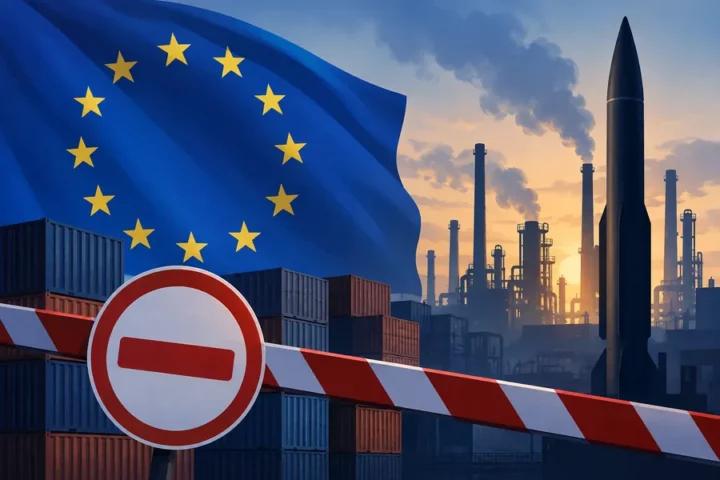
The European Union has adopted a new package of sanctions against Russia, Deutsche Welle reports. EU foreign policy chief Kaja Kallas described it as the largest single expansion of the sanctions list since Russia began the war. More than half of the new listings are linked to the ballistic missile production chain.
According to DW, the package covers around 1,600 people and companies connected to Russia’s war effort. A further 77 people and groups linked to elections in occupied Ukrainian territories, which the EU regards as illegal, have also been sanctioned. EU foreign ministers met in Luxembourg on 12 October 2026 to finalise the package.
Kallas’s remarks, reported by DW, indicate that targeting people and entities involved in producing Russian ballistic missiles is a significant part of the decision. Her description of its record scale refers to the number of new sanctions listings, not the package’s economic value or evidence of its effectiveness.
German Foreign Minister Johann Wadephul described the measures as an unprecedented sanctions blow. In his assessment, they will make it harder for Russia to continue the war. However, the disruption and higher weapons production costs anticipated by Wadephul and Kallas remain assessments of the restrictions’ likely effects, rather than confirmed results.
DW also reports Polish Prime Minister Donald Tusk’s call for more decisive action to stop Russia. Tusk said he would urge European partners in Brussels to increase sanctions further. That is a call for additional action, separate from the package just adopted.
Adoption of the package does not, in itself, mean that every measure it contains is already in force. DW’s report does not specify when the individual restrictions take effect. The decision to expand sanctions should therefore be distinguished both from their legal application and from any later assessment of their impact on Russia’s arms industry.