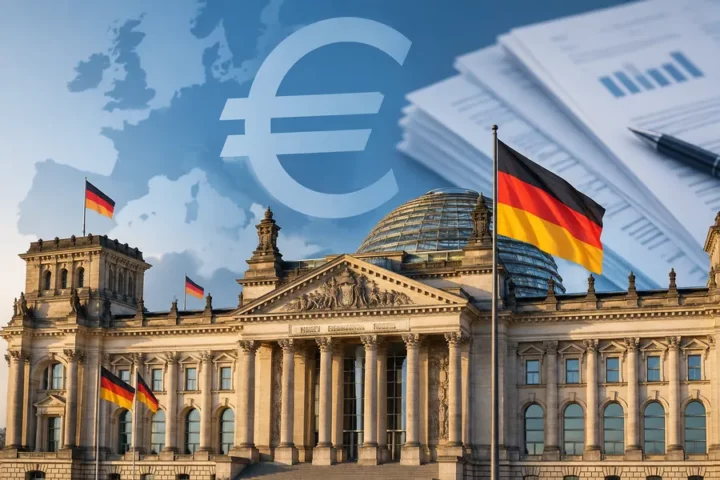
Germany’s budget plans for 2027 envisage more than €210 billion in new borrowing following an agreement by the Bundestag’s budget committee. Deutsche Welle reports that the deal was reached on the morning of 13 November after a meeting lasting more than 15 hours. It marks a stage in the parliamentary process, not final approval of the budget.
The figure reported by DW covers both the core federal budget and special funds for infrastructure and military modernisation. It should therefore not be read as borrowing solely within the core budget. Together, the planned new loans would finance roughly a third of the total planned spending covered by these figures.
A historical comparison underlines the scale of the borrowing: according to DW, it would be the second-highest level of new debt in the Federal Republic of Germany’s post-war history. The highest was recorded in 2021, at €215.4 billion.
Tax revenue for 2027 is meanwhile forecast to come in at just under €400 billion. Both that figure and the borrowing total remain projections: they do not represent revenue already collected or debt already incurred.
The agreement in the budget committee of the Bundestag, Germany’s federal parliament, does not conclude the budget process. DW reports that politicians still see scope for changes. The final spending and financing arrangements for 2027 could therefore differ from the plan agreed by the committee.