Ed Miliband has backed closer ties between Britain and the European Union, pointing to the burdens facing British businesses trading with the bloc. Theresa May, meanwhile, has warned that talks on rejoining would consume the government’s time and energy. Sunday’s comments highlight disagreement over the future relationship with the EU, but do not amount to a decision to seek membership again.
According to the Guardian, the foreign secretary told BBC’s Sunday with Laura Kuenssberg that businesses selling goods in the EU already had to comply with its rules while also dealing with additional paperwork because Britain remained outside the bloc. He argued that closer integration could give the UK greater influence over regulations affecting British companies.
Miliband supported setting out options for future co-operation. The Guardian reported, however, that he stopped short of explicitly backing talks on possible EU membership. That distinction matters: closer ties in particular areas are not the same as starting an accession process.
May warns negotiations would take up government time
In an interview with the BBC, Theresa May criticised the prospect of talks on rejoining. The former prime minister argued that the Brexit referendum result should be respected. She also warned that negotiations would occupy the prime minister, ministers and civil servants, leaving less time for other priorities.
The BBC also recalled David Cameron’s warning earlier in November that rejoining talks would be long and painful. Tony Blair offered a different, conditional position. According to the BBC’s account of his comments to the Sunday Times, a return should depend on EU reform and greater openness to technological innovation.
Emily Thornberry, by contrast, backed renewed membership. The Guardian reported that she argued remaining outside the EU meant continually negotiating the terms of co-operation rather than taking part in decision-making.
Closer co-operation does not mean membership
Prime Minister Andy Burnham has promised further debate and talks about future relations with the EU, without settling on a final model. The BBC and Guardian reports indicate that fundamental changes to that relationship, including any possible return to the EU, would not take place before the next election. No decision to rejoin or timetable for such a process has been announced.
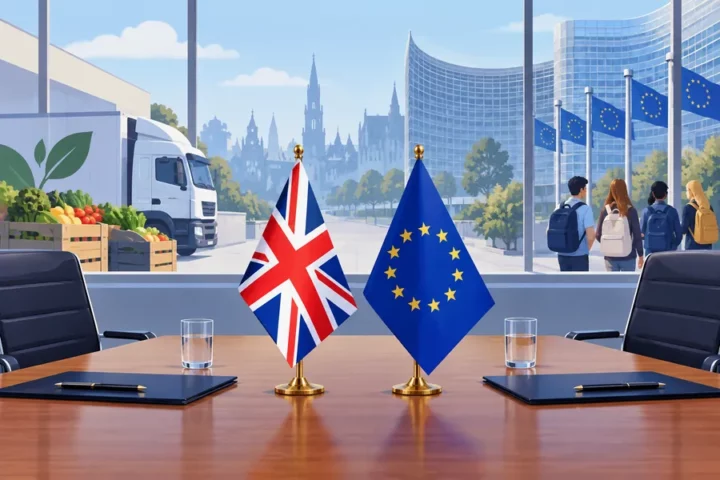
Separate from that debate are earlier UK–EU agreements covering food and drink trade, emissions trading and youth mobility, described by both outlets. Those agreements still require legal procedures, so reaching agreement does not mean that every measure is already in force.
The BBC also identifies tuition fees as an unresolved issue. Miliband has said this will not prevent the agreements from taking effect, but that remains the minister’s assurance rather than a confirmed outcome of implementation. The political dispute therefore concerns both the longer-term direction of relations with the EU and the delivery of co-operation already negotiated.