South Korea’s education minister, Choi Kyo-jin, resigned on 22 November after criticism of preparations to prevent exam cheating. President Lee Jae Myung accepted his resignation, according to the Guardian and BBC. The controversy followed an admission of AI-assisted cheating in a professional qualification exam, which also raised concerns about security at the country’s university entrance examination.
Choi acknowledged that his ministry had not prepared early enough for the threat and said he would take responsibility. In his statement, quoted by the Guardian, he said this year’s Suneung — an exam that plays a major role in admission to South Korean universities — had concluded without serious incidents. His departure followed criticism of the preparations, rather than confirmed widespread use of AI during that exam.
Camera, phone and AI used in a separate exam
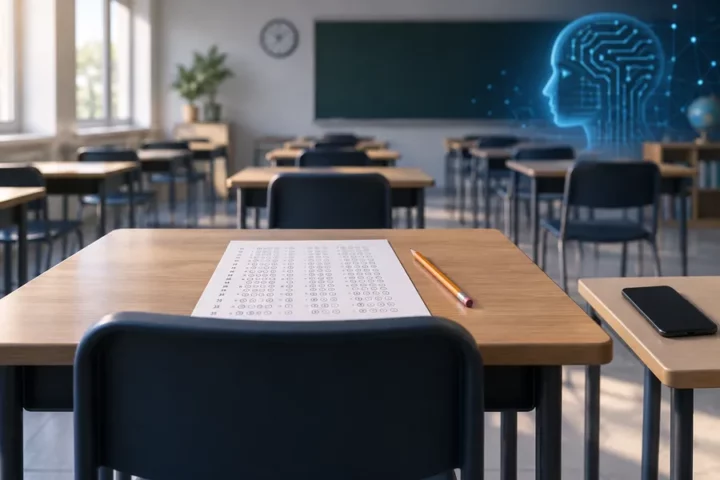
The immediate backdrop was an admission by the highest-scoring candidate in a state examination for tax advisers that they had cheated using a miniature camera, a phone and artificial intelligence tools. That case exposed a threat the education authorities had to address before Suneung. The two examinations were separate: the admission of AI-assisted cheating did not concern the university entrance test.
Before Suneung, the authorities introduced urgent measures to detect prohibited devices. Checks included glasses and items of clothing that could conceal cameras. Nationwide phone alerts were also used during the examination to expose phones that candidates had failed to switch off and hand in.
According to authorities quoted by the BBC and the Guardian, 111 cases involving prohibited electronic devices were detected during this year’s Suneung. That figure does not mean there were 111 confirmed cases of AI-assisted cheating: possession of a banned device alone does not establish that it was used to answer questions.
The controversy touched a particularly sensitive part of South Korea’s education system. Given Suneung’s importance for university admissions, confidence in the examination depends not only on detecting breaches but also on trust in the safeguards put in place beforehand. It was for the late preparation of those safeguards that the minister accepted political responsibility.