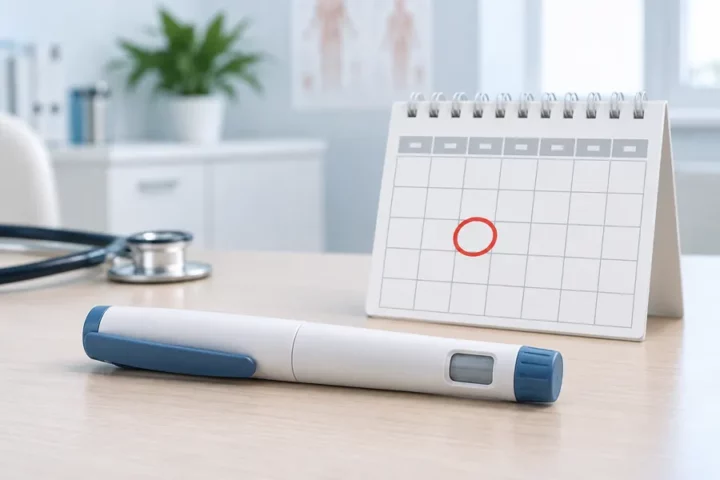
The UK medicines regulator, the Medicines and Healthcare products Regulatory Agency (MHRA), approved Onswik on 13 October 2026 — a long-acting insulin given by injection once a week. The medicine is intended for adults with type 2 diabetes. According to the regulator, it could reduce the number of basal insulin injections for some patients from up to 365 to 52 a year. The decision does not, however, mean that the treatment is already widely available through the NHS, the UK’s publicly funded health service.
Its active ingredient is insulin efsitora alfa, a basal, or long-acting, insulin. According to the MHRA statement, clinical trial data showed blood glucose control comparable to that achieved with daily basal insulins in adults with type 2 diabetes.
Less frequent basal insulin injections could ease the burden of daily treatment, but the MHRA’s comparison does not apply to every patient or to all injections used in diabetes care. The approved indication covers only adults with type 2 diabetes — not children or people with type 1 diabetes.
Approval does not mean immediate NHS access
The regulator’s statement also says that NICE, the National Institute for Health and Care Excellence, which develops treatment guidance and assesses health technologies, has published final draft guidance. It recommends insulin efsitora alfa as a treatment option for certain adults with type 2 diabetes. That recommendation was conditional on MHRA approval, a requirement that has now been met.
Final draft guidance is not, however, confirmation of a widespread NHS rollout. The statement gives no date for Onswik’s availability, price or detailed arrangements for access through the NHS. For patients, the important distinction is between a medicine receiving a marketing authorisation and being available as an NHS treatment.
The most commonly reported side effect is hypoglycaemia, or low blood sugar. The MHRA says it will continue to monitor the medicine’s safety. The marketing authorisation was granted to Eli Lilly Nederland B.V.