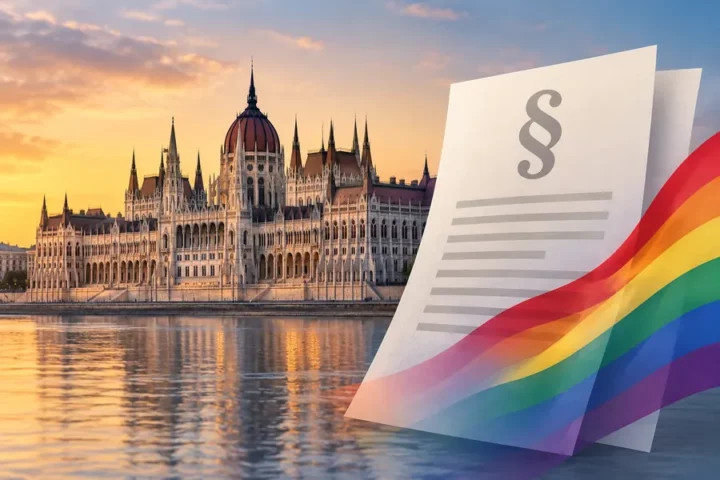
Hungary’s parliament has passed an amendment removing provisions from its child protection law that restrict access to LGBTQ+ content. According to Euronews, lawmakers backed the change by 139 votes to 51 on 13 October 2026. The vote concerns legislation adopted in 2021 under Viktor Orbán’s government, but does not mean that all restrictions on LGBTQ+ rights in Hungary have been lifted.
The existing provisions banned the depiction or promotion of sexual and gender diversity in content accessible to children. The new wording is intended to protect under-18s from material that could seriously harm their physical, intellectual, emotional or moral development. The amendment therefore removes restrictions specifically targeting LGBTQ+ content while retaining protection for minors against harmful material.
Prime Minister Péter Magyar presented the amendment as strengthening protection for children regardless of sexual orientation and bringing Hungarian law into line with European Union rules. Fidesz voted against the change and accused the government of weakening the existing law under EU pressure, Euronews reports.
Other restrictions remain
Tamas Dombos of the Hatter Society, quoted by Euronews via the AFP news agency, described the removal of restrictions on access to LGBTQ+ content as an important and positive step. He stressed, however, that other provisions still needed to change.
According to an assessment by Human Rights Watch cited by Euronews, the amendment does not remove discriminatory constitutional provisions or restrictions in the law on freedom of assembly that have been used to ban Pride marches and other LGBT-related gatherings. The vote alone therefore does not lift restrictions on holding such events. Restrictions also remain on legal gender recognition for transgender people and adoption by same-sex couples.
There is also an important distinction between parliament passing the amendment and the changes taking effect. Euronews does not give a date for the new provisions to come into force. At this stage, the change has been approved by parliament; it should not be understood as a lifting of the bans already in effect.