Ukraine has stabilised the front line, and the losses inflicted on Russian troops have broken their ability to advance, Oleksandr Syrskyi said in an interview published by the BBC on 13 October. The former commander-in-chief of Ukraine’s armed forces also defended his operational decisions and urged European partners to prepare for the possibility of war. His assessment of Russia’s capabilities is not, however, independent confirmation that Russian offensive operations have ended.
Syrskyi argued that the limited scale of Russia’s territorial gains demonstrated that the front had stabilised. According to figures he gave, Russia captured a total of 61 square kilometres in the first half of 2026. The BBC also cites a report by the Institute for the Study of War (ISW), a research organisation analysing the conflict, which found that Russia lost more territory than it gained in September. These cover two different periods: September’s balance does not in itself confirm the figure for the first half of the year.
Losses remain difficult to compare
In his interview with the BBC, Syrskyi claimed that overall Russian losses were six times higher than Ukraine’s, while the number killed was up to eleven times higher. These are comparisons presented by the former commander, rather than independently confirmed figures. The BBC notes that neither Russia nor Ukraine officially discloses the number of its soldiers killed. It also stresses that Ukraine’s claim of record Russian losses in September cannot be verified.
The distinction between a military assessment and a confirmed tally matters here. Syrskyi presents Russia’s heavy losses as the reason its advances have slowed, but the figures discussed in the interview do not independently establish the ratios he cited or demonstrate that Russian troops are no longer capable of mounting offensives.
Defending command decisions and warning Europe
The former commander also responded to criticism of his conduct of the war. He rejected the suggestion that his leadership had failed to keep pace with technological change, pointing to the expansion of drone use during his tenure. Asked about soldiers’ accounts of orders to retreat arriving too late, he did not deny that such situations occur on the front line. In his response, he pointed to Russia’s greater resources.
Syrskyi also defended the operation in Russia’s Kursk region, which began in August 2024. In his assessment, it forced Russia to redeploy troops and gave Ukrainian units time to recover. This was his account of the operation’s benefits, rather than an independent assessment of its consequences.
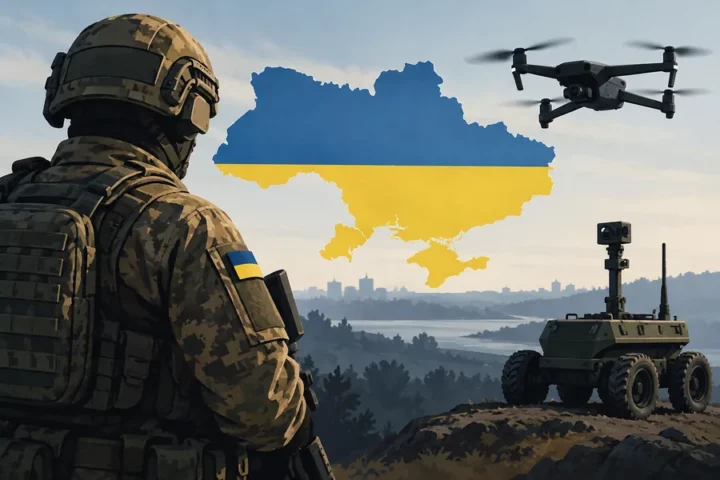
Despite his optimistic assessment of the stabilisation of the front, Syrskyi called on European partners to prepare for the possibility of war. He also predicted that robots, automation and artificial intelligence would play an increasingly important role on the battlefield. These are a warning and a forecast from the former commander, not confirmation that a future conflict is inevitable.