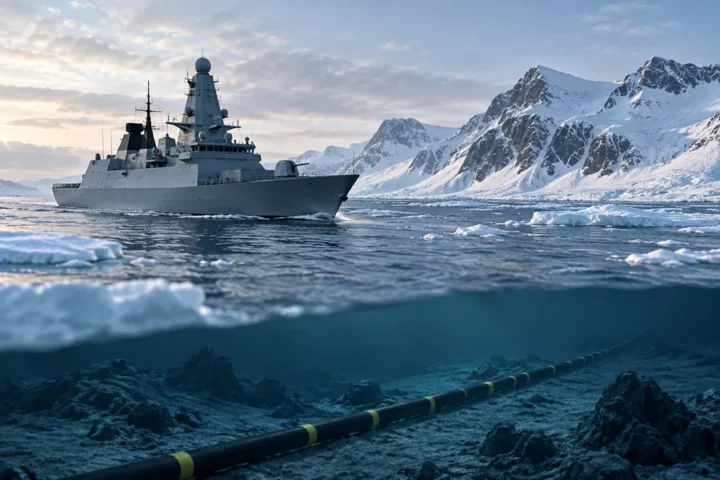
A shortage of British surface ships and submarines could leave undersea cables, energy supplies and Atlantic supply routes without sufficient protection, the House of Commons Defence Committee has warned. According to the BBC, a new committee report identifies serious gaps in the UK’s ability to operate in the Arctic and the High North. The Ministry of Defence says it recognises the Russian threat and is investing in protecting infrastructure.
The MPs’ warning concerns a possible conflict scenario, not an attack that has taken place. According to BBC reporting, the committee believes Russia could, in such circumstances, threaten people in the UK, civilian and military infrastructure, and vital supply routes across the Atlantic from the United States. Defending northern waters therefore matters beyond maintaining a military presence in the Arctic: it also means protecting connections on which the country depends.
Submarines and the gap beneath Arctic ice
One of the most serious problems identified by the committee is the very low availability of Royal Navy submarines. MPs also highlight a temporary loss of the ability to conduct submarine operations beneath Arctic ice.
In the committee’s assessment, Russia could use the ice cover to conceal and protect its own submarines. That could, in turn, threaten NATO’s sea routes, UK critical infrastructure and Britain’s nuclear deterrent. These are risks identified by the committee, rather than a finding that such a scenario is already unfolding.
Committee chair Tan Dhesi called for urgent action to address the gaps. As reported by the BBC, he described the High North as a demanding and hostile environment in which Russia is seeking a military advantage.
A greater role for the Joint Expeditionary Force?
The report also considers cooperation with allies. Against a backdrop of uncertainty over US support for NATO, the committee recommends considering a greater focus on the High North for the UK-led Joint Expeditionary Force, known as the JEF. This is a recommendation for consideration, not an announced change to its remit.
In response, the Ministry of Defence said it recognised the threat from Russia and was investing significantly in protecting undersea cables. A spokesperson also said the JEF was already strengthening NATO’s northern flank and improving its ability to respond rapidly to emerging threats.
The ministry’s response points to protective measures already under way, while the committee is calling for urgent action to close gaps in military capability. At the heart of its warning is whether Britain can effectively protect its infrastructure and supply routes in the event of conflict.