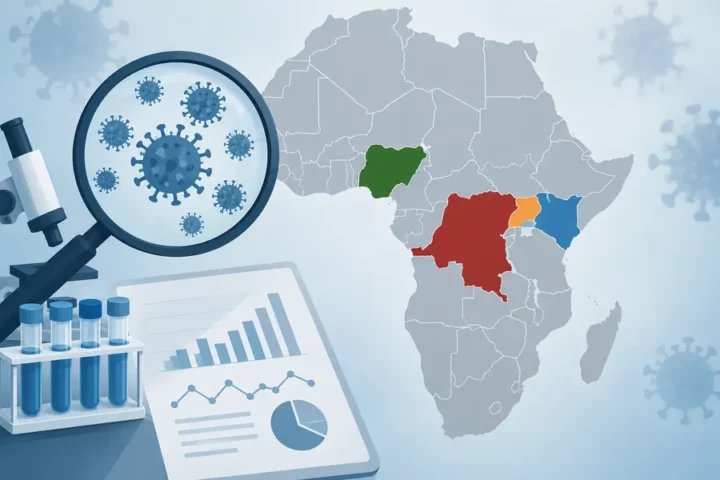
The source of an Ebola infection in a patient in Nigeria remains unknown, amid conflicting accounts of her travels. According to The Guardian, Switzerland’s foreign ministry said on 23 October that the woman had not visited the Democratic Republic of the Congo (DRC), contradicting an earlier account from Ugandan authorities. The World Health Organization (WHO) says its investigation is continuing.
The Swiss foreign ministry said the patient is originally from Uganda and is the wife of a Swiss diplomat based in Abuja. It identified travel within Uganda as the suspected circumstances in which she became infected. That is not, however, a confirmed finding of the investigation: where she encountered the virus remains unknown.
The Swiss statement conflicts with the earlier Ugandan account, which said the woman had travelled to eastern DRC. Speaking at a UN briefing on Friday, WHO representative Catherine Smallwood said the organisation’s staff in the DRC had no information indicating that the patient had travelled there. Her statement does not establish where the infection occurred.
Possible contact with another infected person under investigation
A separate line of inquiry concerns a possible link to an Ebola case in Kenya. According to an official from the Africa Centres for Disease Control and Prevention (Africa CDC), quoted by The Guardian, investigators are examining whether the patient could have had contact with an infected person in connection with travel through Entebbe airport in Uganda.
At this stage, that remains a hypothesis rather than a confirmed chain of transmission. Virologist Marion Koopmans noted that simply being at the same large airport does not establish an epidemiological link. It therefore does not provide grounds for treating a route of transmission between these countries as established.
Nigeria’s health minister, Muhammad Ali Pate, said the case remained under control and that contact tracing was under way. That is an assurance from the Nigerian authorities, not confirmation that further transmission has been ruled out. The key questions — where the woman became infected and whether her case is linked to other infections — remain under investigation.