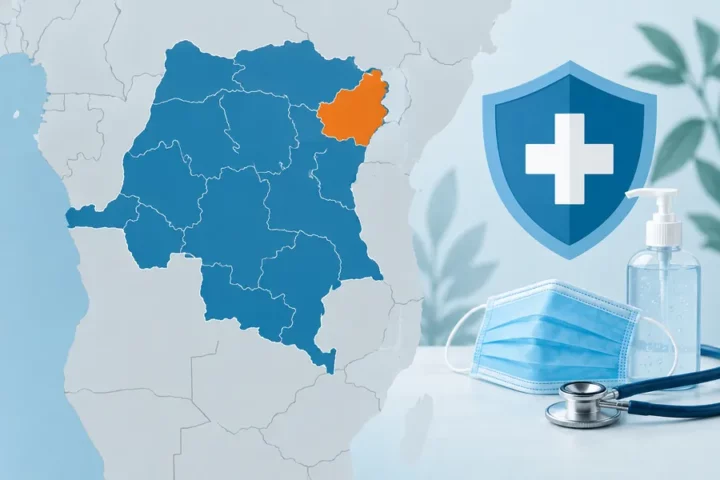
More than 5,000 people have died in the ongoing Ebola outbreak in the Democratic Republic of the Congo, the BBC reports, citing government figures. More than 10,300 cases have been confirmed across eight of the country’s 26 provinces. The epicentre is in Ituri, in the north-east, where conflict is making it harder to deliver aid and contain infections.
The figures, reported by the BBC on 31 October, are not a final toll: the outbreak is continuing. The report does not specify the cut-off date for the case and death counts, so they should not be read as a tally specifically for that day.
According to the BBC, the outbreak began in May 2026. By August, health officials had declared it the deadliest in DR Congo’s history. The country’s previous deadliest outbreak killed 2,299 people between 2018 and 2020, according to United Nations figures cited by the broadcaster.
Ituri at the centre of the outbreak
The latest health ministry update, reported by the BBC, identifies Ituri province as the epicentre. The continuing conflict there is a major obstacle to efforts to control the outbreak. The World Health Organization’s (WHO) Africa office has stressed the need to scale up the response, improve access to affected areas and work with local communities.
The current outbreak is caused by Bundibugyo virus. The BBC reports that there is not yet a vaccine or specific treatment against this virus, although vaccine clinical trials are under way. The absence of a specific treatment does not mean patients are receiving no medical care: the report describes testing and treatment being provided.
The rising toll illustrates the scale of the crisis, but the response also depends on the conditions in which medical teams operate. The needs highlighted by WHO concern both expanding outbreak-control efforts and reaching communities in areas affected by conflict.