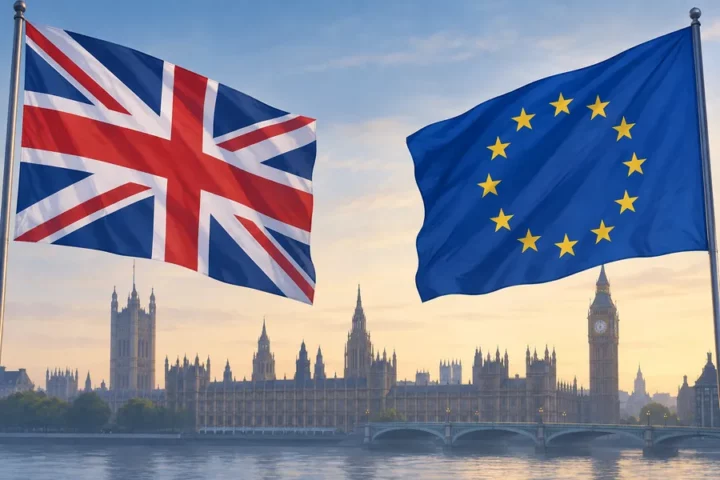
Rachel Reeves has argued that Britain’s future lies in the European Union. According to BBC and Guardian reports, the former chancellor set out her position in the Sunday Times. Her intervention adds to the debate over Britain’s political direction, but does not amount to an announcement of a government decision to rejoin the EU.
According to the BBC and the Guardian, Reeves argued that Brexit had made the country poorer, weaker and less secure. However, she stressed that supporters of renewed membership must win over the public by making their case, demonstrating tangible benefits and carefully planning the next steps.
Her position therefore goes beyond a call to improve existing cooperation with the EU, without setting out a ready-made route back to membership. The consequences she attributed to Brexit represent her assessment, rather than the findings of an independent analysis presented alongside her remarks.
A debate about the EU, not a change to the rules
According to the Guardian, Reeves backed Prime Minister Andy Burnham’s leadership in the debate about future relations with Europe. The newspaper also reports that Burnham wrote to the cabinet saying that a fundamental change to post-Brexit arrangements would require a decision by the public and would be a matter for the next parliament. The intervention comes amid a wider debate about potentially restoring free movement with the EU.
The BBC notes that Labour’s 2024 manifesto ruled out restoring freedom of movement, membership of the single market and a customs union. The former chancellor’s remarks should therefore be distinguished both from the party’s earlier election commitments and from formal government decisions.
Reeves also identified areas where she hopes to see closer cooperation in the shorter term. She expressed hope that a youth mobility scheme would be confirmed at the forthcoming UK–EU summit, alongside progress towards British participation in Security Action for Europe, or SAFE, an EU defence programme. These are expectations, not confirmation that agreements have been reached.
For people living in the UK, the important distinction is between a political declaration and a change in the law. The remarks do not introduce new rules on residence, work or travel. They do, however, show that the debate about relations with the EU now encompasses not only the terms of post-Brexit cooperation, but also the case for renewed membership.