Contents
- Arlington Row deserves a look. It is unlikely to fill a whole day
- The river, the meadow and the gardens are different places
- Bibury through our own photographs
- Four ideas for exploring beyond Bibury
- Map: Bibury and the places mentioned
- Plan the visit around what you actually want to do
- Worth visiting? Yes — with more in mind than one photograph
- Sources and planning links
Plan your route to Bibury — Google Maps
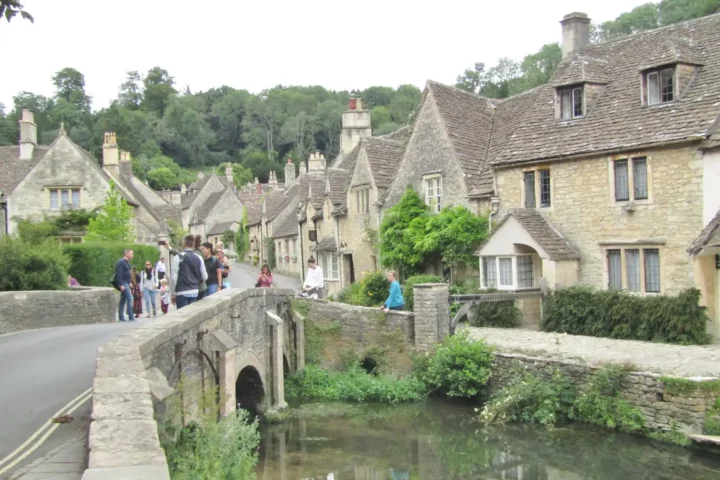
Bibury is lovely. The stone houses, steep roofs, flowers and river are attractive enough without a tourism slogan attached. If you live in Britain, it is a perfectly reasonable place to visit at least once. But would we build an entire day around taking that familiar photograph of Arlington Row? Probably not.
When the journey takes several hours and the plan is simply to photograph the cottages and drive home, the balance starts to look questionable. The Cotswolds, a region of stone villages and rolling countryside, offers far more than this one view. Bibury makes better sense as part of a wider outing, or as somewhere to spend a little longer looking beyond its most photographed corner.
Arlington Row deserves a look. It is unlikely to fill a whole day
Arlington Row is the view that appears in so many photographs of Bibury. There is real history behind it: the National Trust says the buildings probably began as a monastic wool store around 1380 and were converted into weavers’ cottages in the 17th century. Knowing that gives you something more to consider than an appealing roofline.
It is also worth remembering that this is lived-in accommodation, not an open-air museum. The cottages and their gardens are not open for public visits. Taking a photograph from a public path is quite different from stepping through a gate or posing beneath someone’s window. A walk past the buildings, with proper respect for residents’ privacy, is the right way to see them.
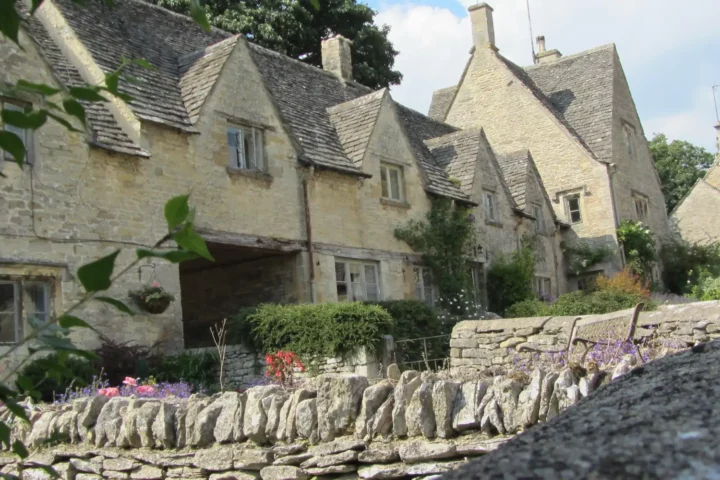
Our reservation about the online excitement is straightforward: attractive stone buildings do not stop at Arlington Row. If old roofs, village architecture and local stone are what you enjoy, leave time for other places too. Bibury’s fame does not make the surrounding villages less interesting.
The river, the meadow and the gardens are different places
Beside Arlington Row is Rack Isle, a wet meadow that provides habitat for plants and wildlife. Water, greenery and a more distant view of the cottages are part of the appeal here. This is not a formal garden or an invitation to picnic wherever you please. Stay on public paths and enjoy the area around the River Coln at a leisurely pace.
If you have heard about gardens in Bibury, look for the full name Bibury Trout Farm and Gardens. This working trout farm, founded in 1902, has ponds and garden grounds and operates as a paid visitor attraction. It is separate from the private cottage gardens. Visiting the farm is one way to make more of the trip, rather than treating Arlington Row as the entire village.
The farm advertises fishing, barbecue hire, crazy golf and a café. Check which activities are available, their additional charges and any weather restrictions before travelling. The café also serves local trout, which gives you a practical option for a food stop. We are mentioning what is on offer, rather than claiming to have tried and reviewed the meals.
You could also walk towards the historic St Mary’s Church on Church Road. It gives you a reason to leave the usual camera spot and see another part of the village. If the church is open to visitors, look inside at its stained glass, while respecting services and anyone using the building for worship.
Bibury through our own photographs
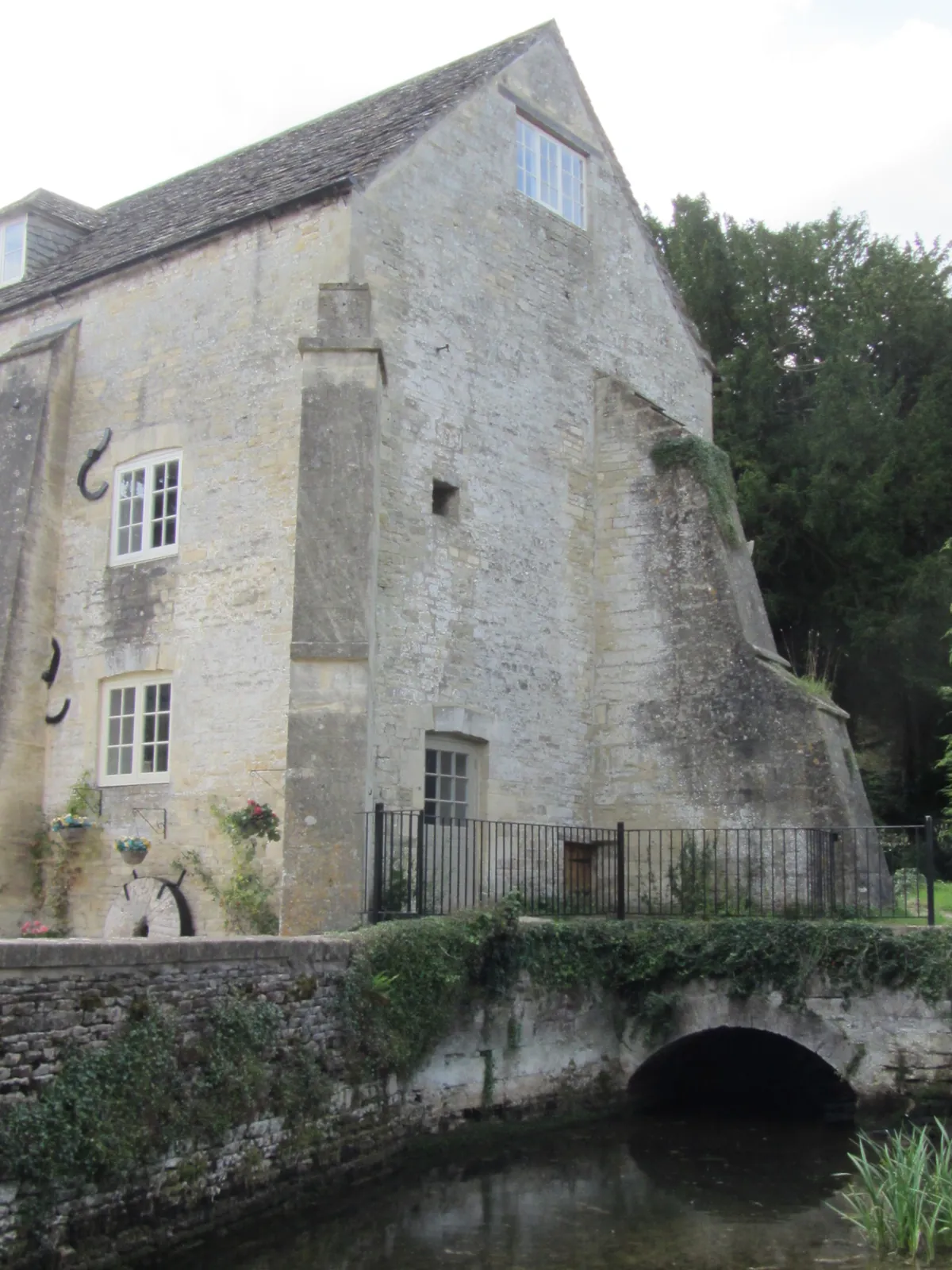
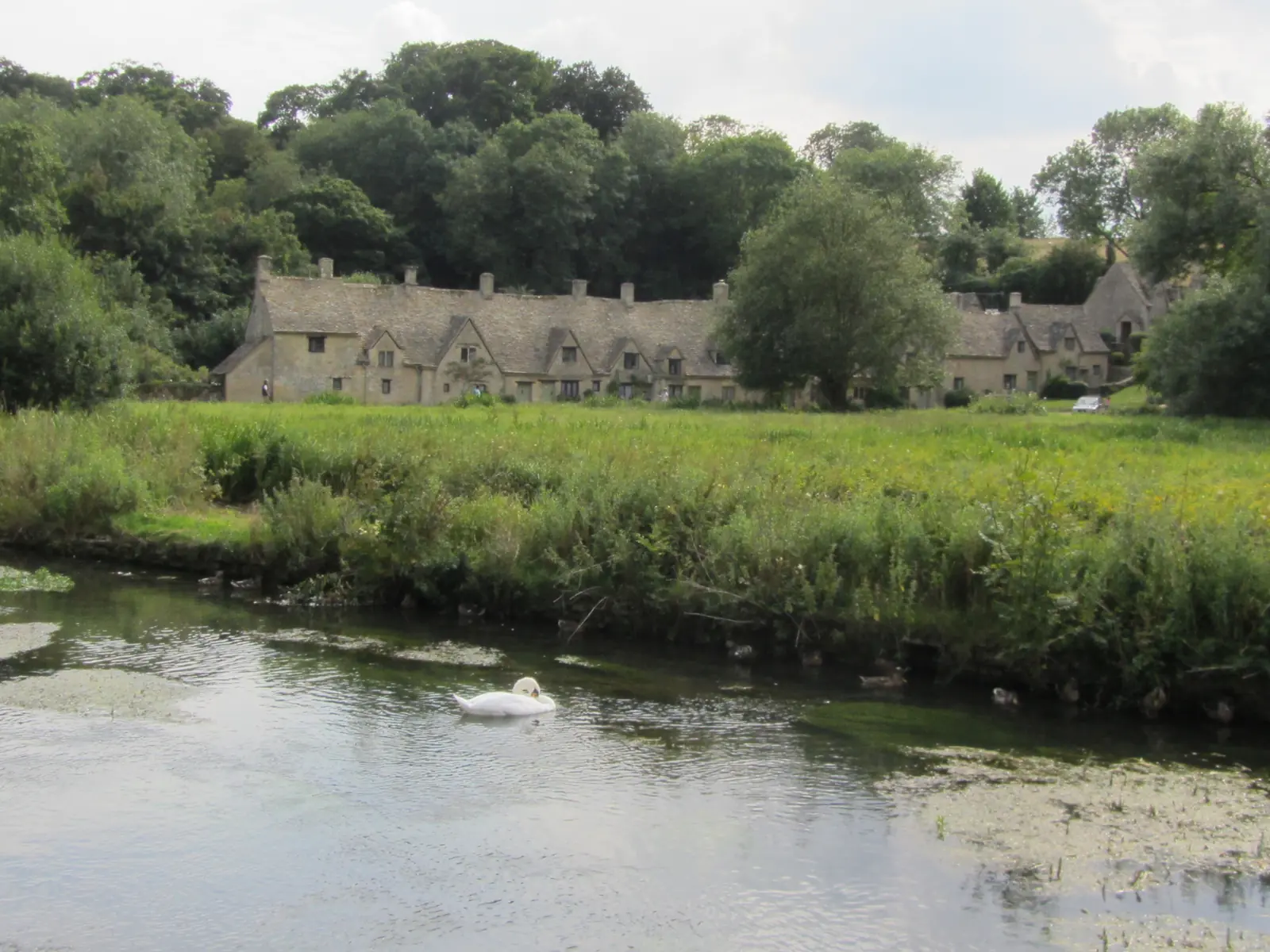
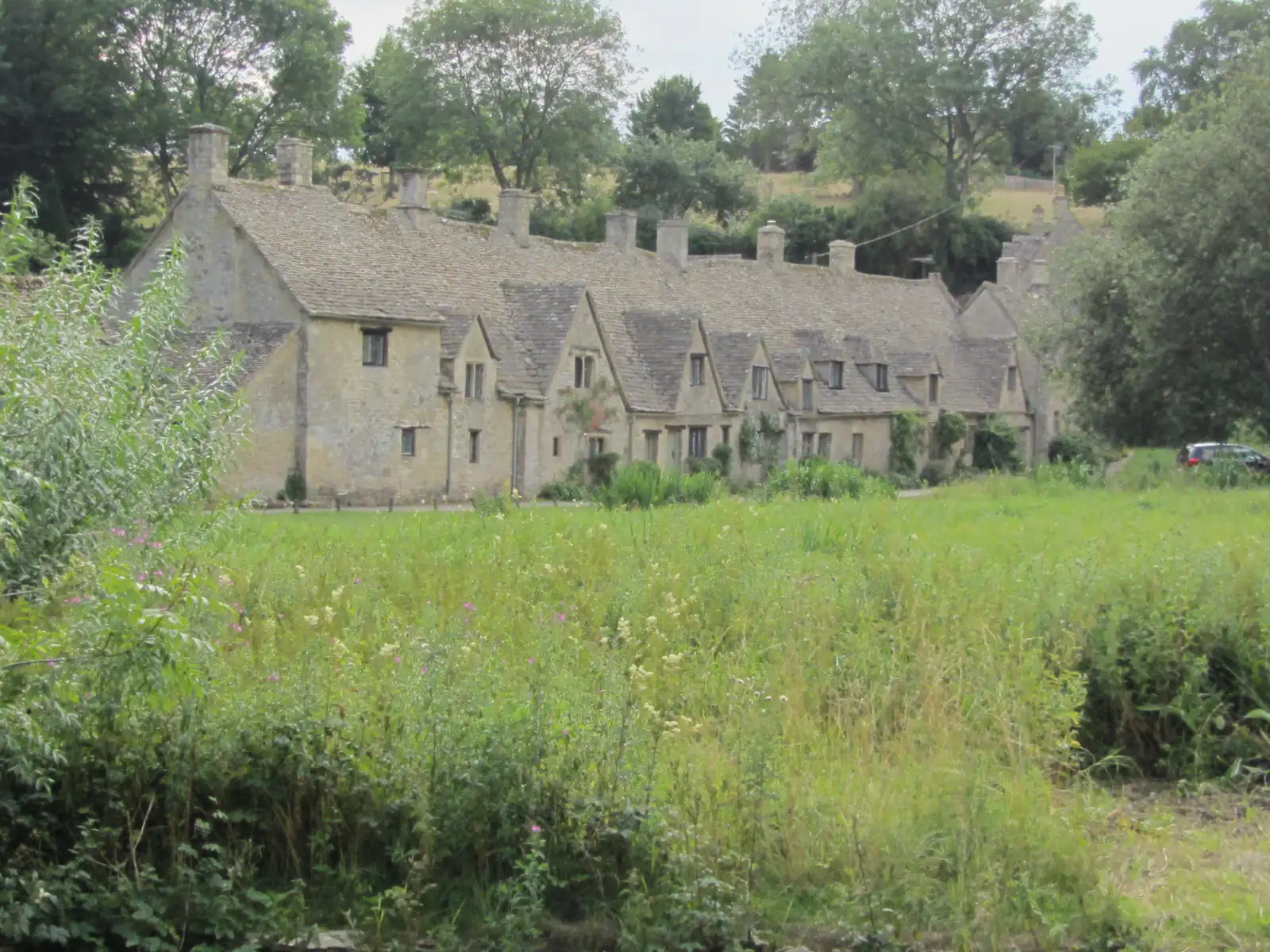
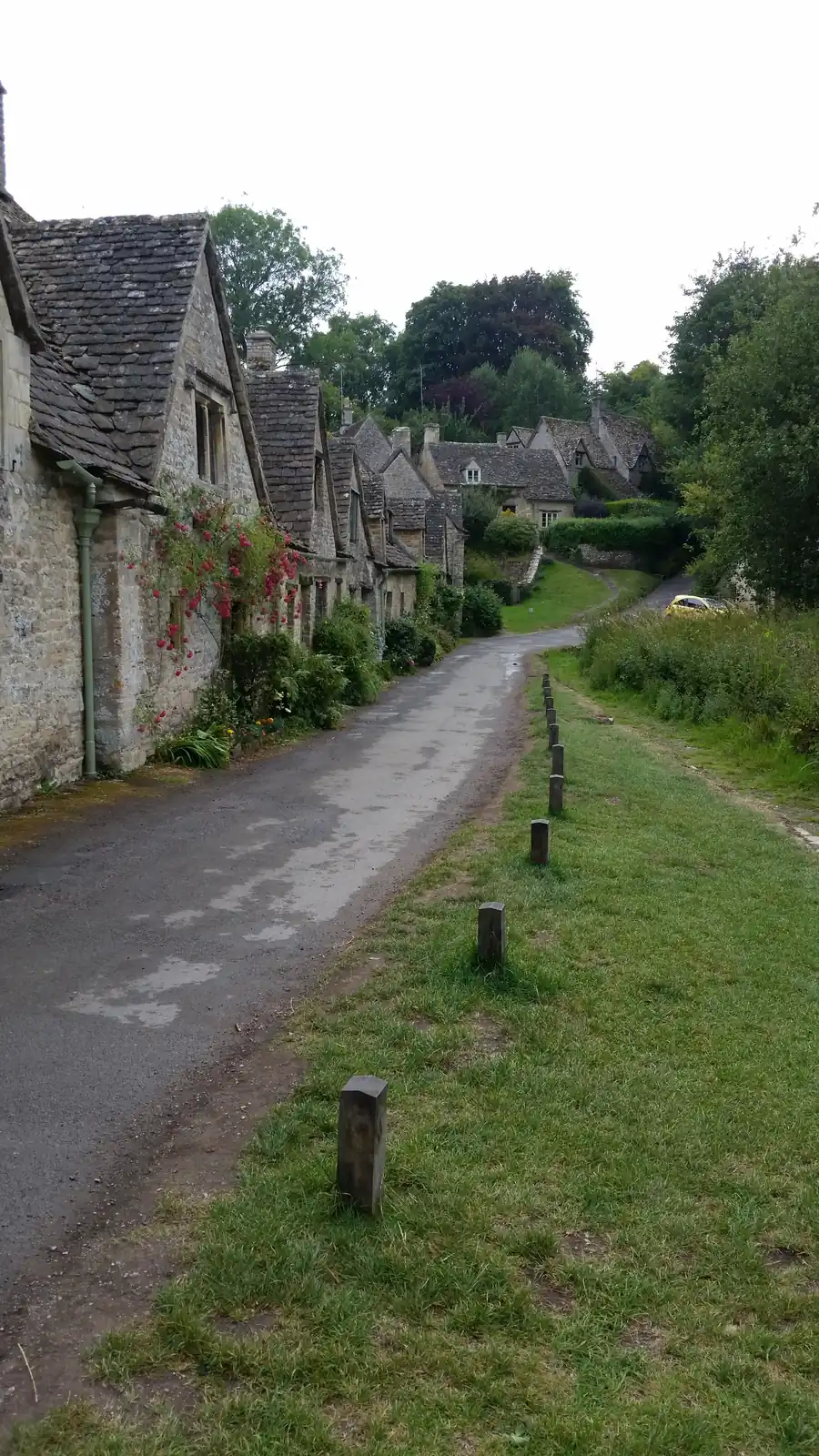
Photographs from the author’s private archive, taken in 2013 and 2015. Select any thumbnail to open the full frame. These images record earlier visits and do not show current conditions.
Four ideas for exploring beyond Bibury
There is no need to rush out of Bibury, or to turn a day off into a list of village names to tick off. Pick one or two other places that suit the kind of outing you want. Some lend themselves to a short wander; others provide a starting point for a longer countryside walk. These would be our suggestions:
- Coln St Aldwyns. A useful choice if you want to stay in the Coln valley and see another village of stone houses. You can also connect it with Bibury on foot: Cotswolds National Landscape publishes a roughly 10 km route with an estimated walking time of three hours. That is a countryside walk rather than a quick pavement stroll, so wear suitable footwear and check conditions. Find the village on a map.
- Eastleach. Two neighbouring settlements, Eastleach Turville and Eastleach Martin, sit across the River Leach from one another. Stone houses, two old churches and the pedestrian Keble’s Bridge offer several reasons to wander rather than hunt for a single photograph. This is an option for anyone who enjoys noticing details in village buildings and walking between their different settings. Find Eastleach on a map.
- Swinbrook. A village on the Windrush near Burford, with stone buildings and The Swan Inn. St Mary’s Church contains the distinctive Fettiplace family monuments, a reminder that a small village can offer something beyond an attractive view. If you want to eat at the pub, check kitchen hours and whether you need a reservation. Find Swinbrook on a map.
- Minster Lovell. Alongside its stone houses are the ruins of 15th-century Minster Lovell Hall beside the Windrush. English Heritage provides free admission to the site; the dovecote can be viewed from outside only. It is a useful choice if you would like some history as part of your walk. Access is narrow and parking is limited, so do not assume there will be a large car park at the end of the lane beside the ruins. Find Minster Lovell on a map.
Map: Bibury and the places mentioned
The Mapy.com outdoor map marks the places in this article: 1 — Bibury, 2 — Coln St Aldwyns, 3 — Eastleach, 4 — Swinbrook, 5 — Minster Lovell. You can pan and zoom the map. The pins show approximate village locations, rather than car parks or walking-route start points.
Outdoor map: Mapy.com. Open the full map with markers on Mapy.com.
Plan the visit around what you actually want to do
Start with the reason for going. If you want to see Arlington Row and walk beside the river, think of Bibury as a shorter stop. If the farm, a meal and a longer walk appeal, allow more time. There is no need to fit every place on our list into a single day; spending your time driving between parking spaces is hardly the point of a day out.
Take care over parking. The National Trust identifies limited free spaces along the main road and opposite the trout farm, while the farm’s own visitor parking is paid. Read the signs on arrival rather than relying on an old online comment. Tourist vehicles should not enter Arlington Row: vehicle access is restricted to residents, and the narrow approach has no space for visitor parking or turning.
Notice checked on 16 October 2026: the Bibury Trout Farm website reports a road closure in front of the farm, with a diversion to its rear entrance. The operator says parking remains available. Check the latest access notice and directions before travelling, rather than assuming this temporary arrangement will still apply on the day you visit.
If you have a pushchair or limited mobility, read the access information first. There are surfaced sections beside Arlington Row, but also a narrow bridge and sections where the path narrows. Longer walks between villages need separate consideration; after rain, countryside conditions can be very different from the scene in a summer photograph.
Worth visiting? Yes — with more in mind than one photograph
Bibury has enough appeal and history to justify seeing it at least once. There is no need to pretend that the famous cottages have nothing to offer. It helps, though, to match expectations to the place: this is a village with distinctive buildings, a river and other attractions, rather than the whole Cotswolds experience contained in one view.
If you live nearby, go for a wander. If the journey is longer, make it part of a day exploring the area. Take the Arlington Row photograph if you want to, then put the phone away and see what lies beyond it. That is where the trip starts to feel more rewarding.
For more ideas for days out, browse our Leisure section.
Sources and planning links
- National Trust — Arlington Row, Rack Isle and visiting information
- Bibury Trout Farm and Gardens — admission, access and activities
- Bibury.com — St Mary’s Church
- Cotswolds National Landscape — Bibury and Coln St Aldwyns (PDF)
- Cotswolds Tourism Partnership — The Eastleaches
- Cotswolds Tourism Partnership — Swinbrook
- English Heritage — Minster Lovell Hall and Dovecote
- Mapy.com — Bibury and the surrounding villages map
Practical information checked on 16 October 2026. Check operators’ current notices, opening times and prices before travelling. The assessment of whether the trip is worthwhile is our editorial opinion.