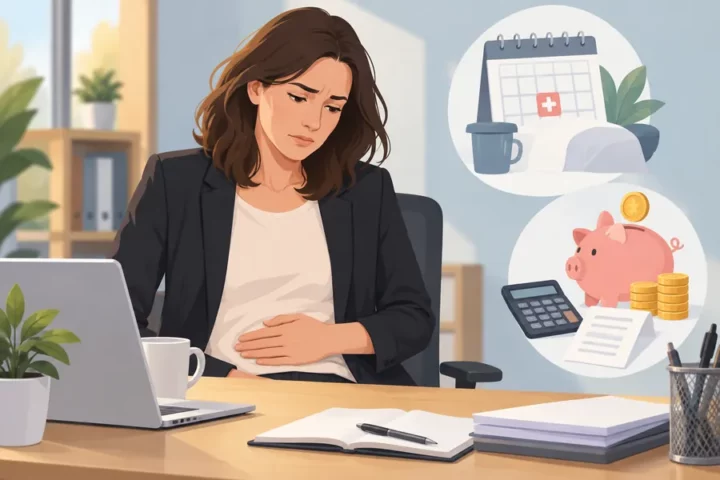
Severe pain did not mean stopping work, but for many women endometriosis meant losing income or leaving their jobs. According to findings from a parliamentary group’s report cited by the BBC, 97% of women surveyed had worked despite severe pain. Almost half — 47% — had lost income because of their symptoms, while 28% had left their jobs.
The report by the All-Party Parliamentary Group on Endometriosis, a cross-party group of MPs and peers, sets out the difficulties participants faced in their working lives. The BBC reports that more than 6,000 women took part in the survey. Some 94% felt employers lacked a good understanding of the condition, and half had not received workplace adjustments.
These figures describe the experiences of survey participants, rather than all women with endometriosis in the UK. The BBC does not set out the full methodology or provide enough information to assess how representative the sample was. It also does not specify when the data was collected.
The personal cost of losing work
One of the women who spoke to the BBC about her experience was Hayley Locksley. She said she had lost her job supporting pupils with special educational needs at a primary school after her sickness absences increased and she was deemed unfit for work. She also described the negative effect that losing her job had on her mental health.
A lack of support also emerged in the part of the research involving employers. Of the 250 employers surveyed, 72% said their organisation did not provide training or guidance on women’s health. The finding highlights a gap in workplace provision reported by employers themselves.
Carla Cressy, who runs The Endometriosis Foundation and contributed to the report, called for better support from employers. Speaking to the BBC, she also urged greater priority for care for people with endometriosis.
Government pledges to work with employers
A spokesperson for the Department of Health and Social Care acknowledged in a statement to the BBC that endometriosis can have a devastating impact on women’s lives. The department said the findings showed the need for better support in both healthcare and the workplace. The government says it is working with employers to improve awareness of the condition.
Matthew Percival of the Confederation of British Industry, an organisation representing British employers, told the BBC that businesses were increasingly aware of women’s health issues and were looking for ways to support women without holding back their careers.
These statements do not amount to new legislation or guarantee specific workplace changes. The report does, however, put the focus not only on sickness absence, but also on working through severe pain — and the consequences for the incomes and careers of the women surveyed.