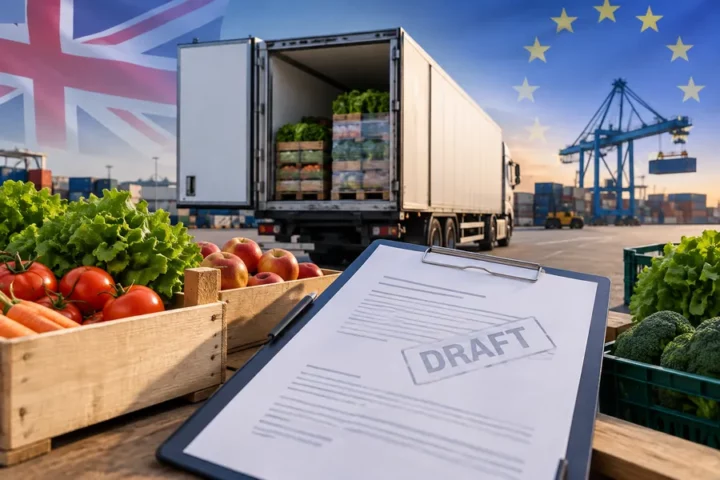
The UK and the European Union have agreed a draft deal intended to remove a substantial share of checks and paperwork on trade in food and agricultural products, the BBC reports. The document was to go before member states ahead of a UK–EU summit scheduled for November. It is not yet a signed agreement and does not change the rules currently in force.
According to the BBC’s reporting, published on 3 November, the draft runs to around 200 pages and has been submitted for consideration by EU ambassadors in Coreper, the Committee of Permanent Representatives. It is a sanitary and phytosanitary agreement, usually shortened to SPS, covering food safety and animal and plant health.
Fewer certificates and checks, but shared standards
The draft aims to reduce barriers introduced after the UK left the EU’s single market. The BBC says the proposed changes include removing requirements for some health and phytosanitary certificates, along with the associated fees, checks and paperwork for trade with the EU.
The agreement would also pave the way for British exports to the EU to resume for products including fresh sausages, burgers, shellfish from British waters and seed potatoes. For businesses, that would mean not only fewer documents at the border but also restored access to parts of the market.
In return, the UK would follow existing EU standards on food, animals and plants and adapt to subsequent changes. This is known as dynamic alignment: maintaining common rules not only when the agreement is concluded, but also as EU legislation changes.
Benefits for businesses and food movements to Northern Ireland
According to the BBC, the British government estimates the eventual benefit to the UK economy at £5.1 billion a year. That is a forecast of the agreement’s impact, not savings already achieved. A representative of the British Chambers of Commerce, which brings together chambers of commerce, cited by the broadcaster says shared rules could mean lower costs, fewer delays and better market access for businesses.
The changes would also reduce paperwork and checks on food moving from the rest of the UK to Northern Ireland. The agreement would therefore affect not only trade with the EU, but also deliveries within the United Kingdom.
The BBC also reports that draft texts have been submitted on linking the UK and EU emissions trading systems and on a travel and work scheme for young people. Some details of the latter still require political agreement.
For now, the key distinction is between an agreed draft and an agreement in force. Details of the document come from the BBC’s reporting, which does not give a date for the new rules to start applying. Businesses should not treat the reports as an announcement that existing border requirements have already been removed.