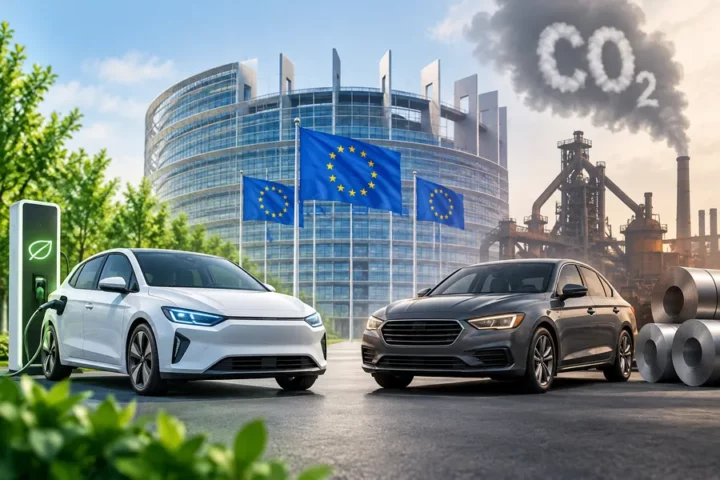
The European Parliament’s environment committee backed softer CO2 reduction targets for new cars and vans on 4 November, Euronews reports. The compromise would lower the 2035 emissions reduction target for new cars from 100% to 87.5%. This is a parliamentary committee position, not a change to the law.
According to Euronews, the agreement was negotiated by three political groups: the European People’s Party (EPP), the Socialists and Democrats, and Renew Europe. It would give manufacturers greater flexibility in meeting emissions requirements, although the final rules will depend on the next stages of the legislative process.
What would the compromise change?
Alongside the proposed 87.5% emissions reduction target for new cars, Euronews reports that the compromise includes an additional 7.5% credit for manufacturers using climate-friendly steel. For vans, the proposed target would fall from 90% to 80%. These figures describe emissions requirements and accounting mechanisms; they should not be read as directly determining the proportion of combustion-engine vehicles that could be sold after 2035.
The vote forms part of work on changes proposed by the European Commission in December 2025. According to Euronews, the Commission proposed lowering the 2035 tailpipe emissions reduction target from 100% to 90%. Manufacturers would be able to offset the remainder through credits linked to low-carbon steel produced in the European Union and sustainable fuels.
Industry and the pace of electrification
EPP representatives argue that greater technological flexibility would help support the competitiveness of Europe’s automotive industry and protect jobs. The Greens, by contrast, criticise the proposed easing of requirements, warning that it risks slowing the shift to electric vehicles and undermining the certainty needed for investment. These are the positions of the political groups involved, rather than established consequences of the proposed rules.
For anyone planning to buy a car, the key distinction is between a proposal and the law. As Euronews notes, the compromise still needs the backing of the European Parliament in a plenary vote — a vote of the full Parliament — and negotiations with member states before it can become law. The environment committee’s vote alone therefore does not change the rules governing new car sales.