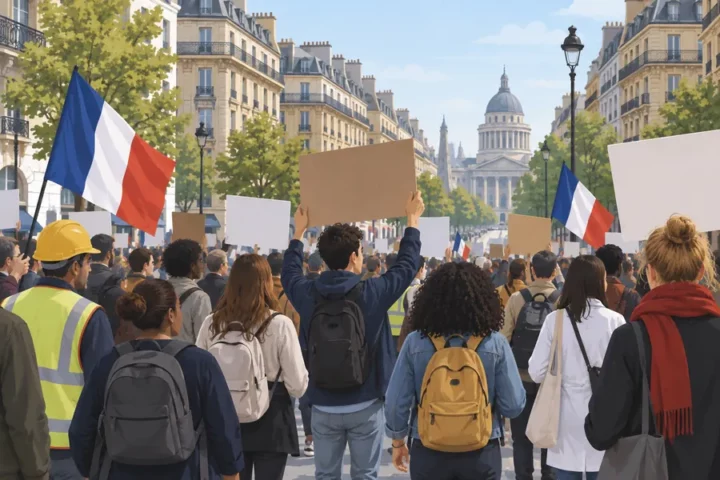
Protests against the high cost of living and deteriorating public services took place in French cities on 5 November. According to Interior Minister Laurent Nunez, whose remarks were reported by Deutsche Welle, the nationwide turnout reached 600,000 by the evening.
Demonstrators took to the streets in Paris, Lyon, Marseille and Nantes, among other cities. Five trade unions representing public- and private-sector workers organised the protests. School and university students joined workers, adding demands for better learning conditions to calls for higher pay.
Calls for higher wages and better public services
Protesters demanded an increase in the minimum wage, wider pay rises and tax reforms. Opposition to the high cost of living went hand in hand with dissatisfaction over the state of public services. Unions representing workers in education, the railways, public hospitals and postal services were among those calling for strike action.
According to the French education ministry, quoted by DW, just over 15% of teachers took part in the strike. That figure measures teachers’ participation in industrial action, rather than attendance at street demonstrations.
The turnout reported by the interior minister rose from 270,000 in the afternoon to 600,000 in the evening. These are figures attributed to the minister, not an independent count. Both refer to successive stages of the same day of protests.
Most demonstrations peaceful
DW reported that the protests were largely peaceful. There were, however, reports of clashes in Lyon and incidents in Paris, where police used tear gas. Those local incidents did not reflect the character of demonstrations across the country.
Higher wages, tax changes and better learning conditions remain demands made by the protesters, rather than measures adopted by the authorities.