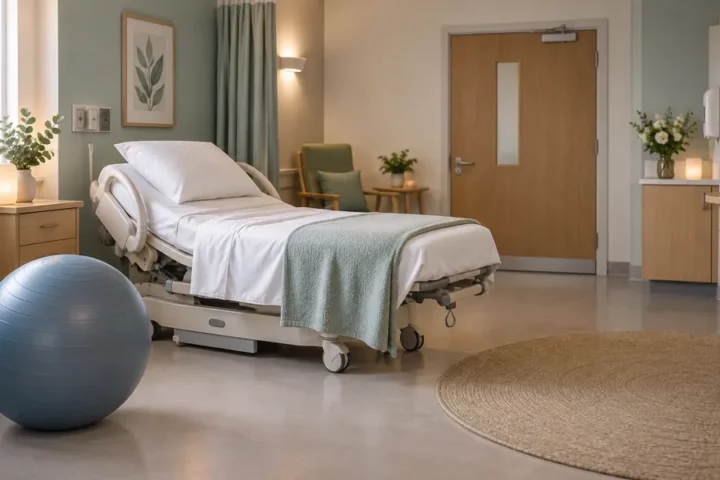
Twelve midwife-led birth centres in England have closed since 2019, according to a Guardian investigation published on 7 November. Not all have shut permanently: some remain temporarily closed, although their services have been suspended for years. Organisations supporting women warn that losing local services restricts birth choices and leaves some families facing longer journeys.
The findings concern centres where midwives lead care during childbirth, rather than hospital maternity units as a whole. The newspaper distinguishes between six permanent closures since Labour took office in July 2024, four prolonged closures described as temporary, and two linked to the condition of hospital buildings.
Temporary closures lasting years
The six permanently closed centres are in Rossendale, Edgware, Melton Mowbray, Stafford, Lichfield and Pontefract. Elsewhere, services remain suspended without a final decision on their future.
Huddersfield’s birth centre has been closed since November 2020. The NHS trust responsible for it — the organisation managing local public health services — told the newspaper that no decision had been made about reopening and that it could not give a date. Ingleside in Salford has not accepted births since January 2022, while births at Crowborough were suspended in October 2025.
According to The Guardian, reasons for closures and service suspensions include midwife shortages, falling birth numbers, increasingly complex maternity care needs and a rise in caesarean sections. NHS organisations frequently cite a lack of staff to run centres safely.
Less choice and longer journeys
Birthrights and the National Childbirth Trust say the loss of local services means not only longer journeys for some women, but also extra costs and greater uncertainty. In their assessment, this reduces women’s meaningful choice over where to give birth.
The Royal College of Midwives, the professional organisation for midwives, also warns that restricted access to midwife-led care could prompt some women to seek private care or give birth without medical professionals present. This is a warning about possible consequences, not evidence of a documented increase in such births.
In a response quoted by the newspaper, the Department of Health stressed the importance of safe care and strengthening staffing. It said the number of midwives working in the NHS was at a record high, having risen by more than 600 over the past year. However, workforce figures for the NHS as a whole do not establish whether individual centres have enough staff to reopen.
There are also plans to restore services. According to the newspaper, the trust in Gloucestershire announced plans to reopen Cheltenham’s birth centre in February and resume home births in January. Those are planned changes, rather than confirmation that care has already resumed. For families relying on local services, the crucial question remains not simply whether a closure is labelled temporary, but when the centre will actually be available again.