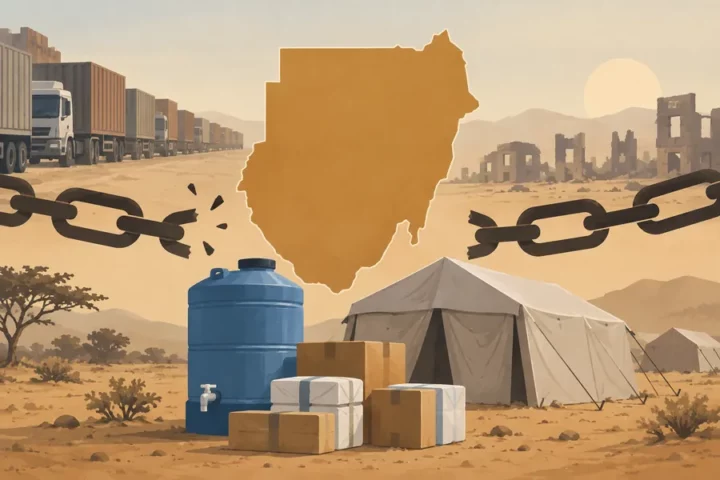
Funding shortages have exhausted stocks of emergency shelter and basic household items for people in Sudan, the International Organization for Migration (IOM) and the UN Refugee Agency (UNHCR) warn, according to Deutsche Welle. Aid is reaching only a small proportion of those who need this support, while fighting, drone attacks and logistical problems hamper deliveries.
Figures cited by DW in its report on 14 November show that 33.7 million people in Sudan need humanitarian assistance. The UN aid plan seeks $2.9 billion to provide life-saving support to 20.4 million people. According to the broadcaster, 47% of the required funding has been raised.
Millions need shelter
The gap is particularly stark when it comes to shelter and the essentials of daily life. DW reports that 15.4 million people need emergency shelter and basic household items, but aid organisations have managed to reach only around 10% of that group.
Mass displacement lies behind those needs. According to figures in the report, around 8.6 million people have been displaced within Sudan, while more than 4.6 million have fled to neighbouring countries. A further 5.2 million have returned to their home regions despite continuing fighting and damage to towns and infrastructure. Returning home does not, therefore, mean an end to the need for assistance.
The funding shortfall is compounded by difficulties reaching civilians. Fighting, drone attacks and logistical obstacles restrict deliveries, while limited humanitarian access also makes it harder to assess the full scale of the crisis.
Calls for funding and humanitarian access
Ivo Körner of Caritas International told DW that declining aid funding was not confined to the United States, but also affected Germany and the European Union. His assessment points to a broader challenge in securing money for humanitarian operations.
DW also recalls an appeal issued by the UK and 31 other international partners on 23 October. They called for unhindered humanitarian access, protection of civilian infrastructure and increased funding.
Meanwhile, in a statement dated 26 October, the authorities in Khartoum rejected warnings of famine. According to DW, they maintain that reserves and agricultural production are sufficient to meet needs. That is the authorities’ position, rather than confirmation of the supplies available to civilians. The shortages of shelter, basic items and funding described by aid organisations underline the continuing gap between people’s needs and the support available.