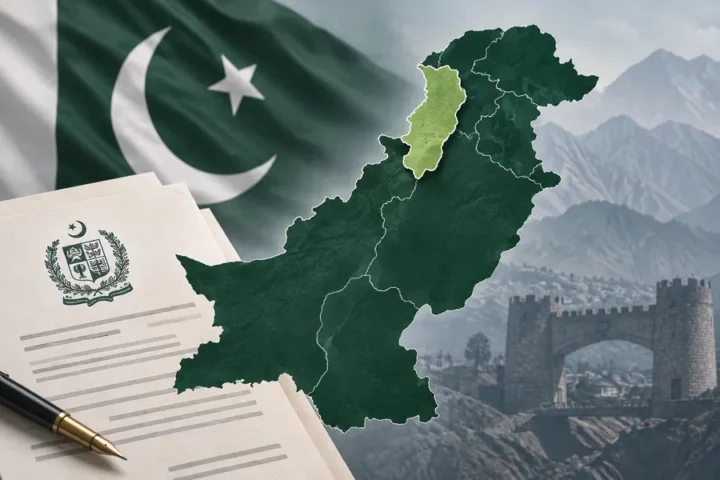
Pakistan’s President Asif Ali Zardari declared a state of emergency in Khyber Pakhtunkhwa on 11 October 2026, Deutsche Welle reports. According to the broadcaster, the decision effectively suspends the provincial government and removes former prime minister Imran Khan’s party from power there. It came as thousands of Khan’s supporters protested to demand his release from prison.
Prime Minister Shehbaz Sharif proposed emergency rule, and the president signed the order on the same day, DW says. Khyber Pakhtunkhwa, in north-western Pakistan, is an important centre of support for Khan and had been governed by his Pakistan Tehreek-e-Insaf (PTI) party.
The central authorities cite security threats as the reason for the decision. According to DW, they invoked constitutional provisions concerning emergencies and the powers of the central government. Sharif’s government alleges that the provincial administration did not do enough to curb Islamist violence. That is the government’s allegation against the regional authorities, rather than an independently established assessment of their actions.
The decision therefore has political as well as administrative significance: in DW’s account, it strips PTI of power in a region that forms an important part of Khan’s support base. Meanwhile, those taking part in the continuing protests are opposing the government and calling for the former prime minister to be freed from prison.
DW’s report does not specify how long emergency rule will remain in force or how the province will be governed in the meantime. Its description of the suspension of the provincial authorities sets out the effects of the decision as reported by the broadcaster, rather than establishing the detailed legal and administrative arrangements.