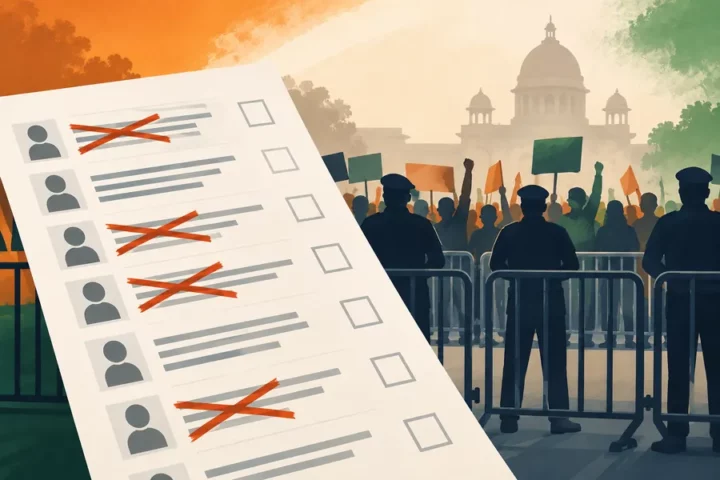
Mass detentions, roadblocks and transport restrictions accompanied a demonstration planned for 10 October in Delhi against the removal of entries from electoral rolls. According to the Guardian, more than 6,000 people were detained while trying to reach Jantar Mantar, where the protest was due to take place. Police also detained the leader of the movement that called the demonstration.
The protest was organised by the youth movement Cockroach Janata Party (CJP), which is demanding the resignation of India’s chief election commissioner, Gyanesh Kumar. The Guardian reports that CJP founder and leader Abhijeet Dipke was detained on Saturday morning after his flight landed at Delhi airport.
Police had refused permission for the protest in central Delhi. According to the Guardian, more than 25,000 police and security personnel were deployed across the city. Roadblocks and checks were put in place on routes into Delhi, almost 50 metro stations were closed, and incoming trains to two of the city’s main stations were cancelled for ten hours. The restrictions therefore extended beyond the planned gathering place to the routes participants could use to reach it.
The newspaper reports that detentions across India ran into the tens of thousands. This is not, however, an official police tally or a final count. In its report of 9 October, the Guardian cited a Thursday post on X by CJP spokesperson Ashutosh Ranka, who claimed that at least 10,000 people linked to demonstrations and protesting organisations had been detained. These estimates should not be added together: they come from successive accounts of a developing situation.
Dispute over the electoral roll review
At the heart of the protest is a review of electoral registers known as the special intensive revision (SIR). According to both Guardian reports, around 130 million entries have been removed through the exercise. The newspaper also reported millions of appeals against removals.
Opposition parties and protesters allege that the operation serves the political interests of Narendra Modi’s government and disproportionately affects their supporters. The election commission and the government reject those allegations. As the Guardian reported, they say the review is necessary to remove duplicate entries and those relating to people who are not eligible to vote.
The number of entries removed does not, in itself, mean that the same number of eligible people have unlawfully lost their right to vote. Whether the changes are justified, and how they affect voters, remain at the centre of the dispute. Protesters are demanding the election commissioner’s resignation, while the authorities defend the review as an exercise in cleaning up the registers.