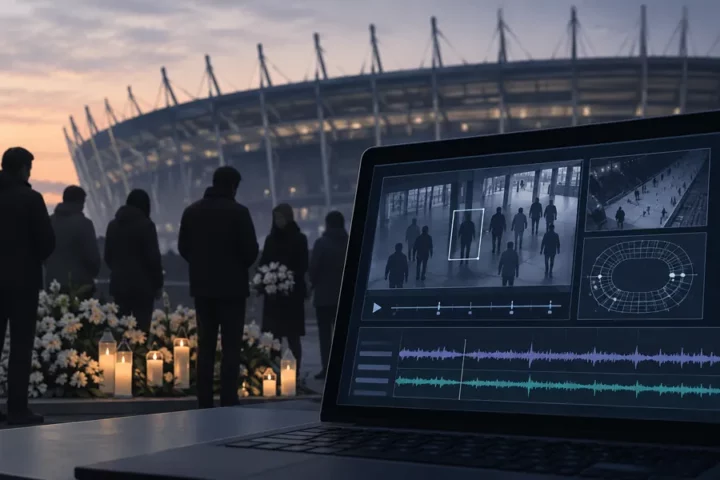
Three mourners killed after Kenyan police opened fire during a farewell to former prime minister Raila Odinga were not involved in the clash that preceded the shooting, according to a BBC Africa Eye investigation. Its analysis of photographs and footage places them tens of metres away from the confrontation — and two of them more than 100 metres away.
The new report, published on 11 October 2026, examines events on 16 October 2025 at Kasarani stadium in Nairobi, where people had gathered to pay their respects to Odinga. Journalists from BBC Africa Eye analysed more than 1,500 photographs and videos to establish the victims’ positions and spoke to their relatives.
According to that analysis, Evans Kiche was about 60 metres from the clash. Vincent Ogutu and Jidah Burka were at least 160 metres away, in the stands on the opposite side. The BBC reports that Kiche and Burka died from gunshot wounds to the head, while Ogutu was fatally shot in the chest.
A clash in one part of the stadium
The report describes how some members of the crowd tried to force their way into the VIP area and threw objects, including plastic chairs. However, according to the BBC, footage from other parts of the stadium shows that most of those gathered remained calm. Establishing where the three men were distinguishes their behaviour from that of people involved in the confrontation.
Interior minister Kipchumba Murkomen told the BBC that the police response had been restrained and that the crowd had thrown stones. The journalists say they found no evidence of stone-throwing in the footage they analysed. That does not rule out such incidents elsewhere in the stadium, but the material examined by the BBC does not support that part of the minister’s account.
Questions over responsibility for the shooting
The BBC identified at least eight armed officers operating together. At least three appear to be firing in the footage. The broadcaster identified three officers as members of an elite unit responsible for protecting the president.
According to the BBC, its analysis suggests that the fatal shots may have come from that unit. However, the report does not establish which bullets killed each mourner, nor does it rule out other officers having fired. It therefore does not determine individual responsibility for the deaths of Kiche, Ogutu and Burka.
At the time the report was published, the Independent Policing Oversight Authority (IPOA), Kenya’s independent police watchdog, was still investigating the case. According to the BBC, no one had yet been held accountable for the mourners’ deaths. IPOA did not respond to the broadcaster’s request for comment.
Murkomen said the watchdog’s findings would help inform appropriate legal action. Kenyan police, meanwhile, told the BBC they had learnt lessons from the events. The journalists’ findings remain separate from the ongoing investigation and are not a final court ruling.