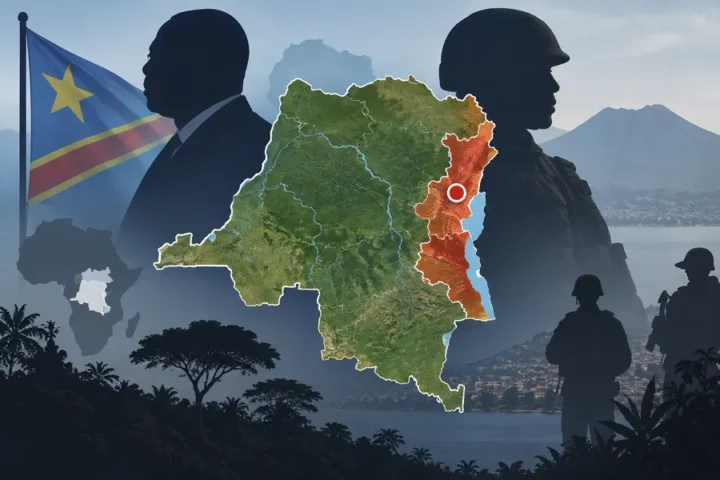
Joseph Kabila is taking charge of a new political-military front whose leadership includes figures from the AFC and the M23 rebellion. According to Deutsche Welle, the former president of the Democratic Republic of the Congo announced the Front for the Refoundation of the Nation (FRN) at his residence in Goma on 12 October 2026. Analysts quoted by DW suggest that his leadership of the organisation could change the balance within the opposition to President Félix Tshisekedi, although the consequences of the reorganisation remain uncertain.
The front is being formed while diplomatic efforts are under way to end fighting between government forces and the rebellion. DW notes that M23 captured Goma and Bukavu in the east of the country in 2025. The conflict also has a regional dimension: authorities in Kinshasa, the United Nations and Western governments accuse Rwanda of supporting M23 and influencing its operations. Rwanda denies supporting the rebellion and points to threats to its security from armed groups operating in Congo.
The FRN’s links to groups involved in the conflict are reflected in its leadership. DW reports that former AFC leader Corneille Nangaa and M23 political leader Bertrand Bisimwa are among its leaders, while M23 military commander Sultani Makenga has also received a senior position. AFC/M23 leaders attended the announcement of the new front.
The FRN is intended to replace the Congo River Alliance (AFC), a coalition allied with the M23 rebellion. Coalition adviser Claude Ibalanky, quoted by DW, said the new organisation’s purpose was to bring opposition forces together, including figures associated with AFC/M23.
Kabila, allegations and a sentence in absentia
Congolese authorities had previously accused Kabila of supporting the rebellion, allegations the former president denied. According to DW, on 30 September 2025 a military court sentenced him to death in absentia for treason, war crimes and other offences connected with the conflict. Kabila described the case as politically motivated.
Kabila’s leadership of the FRN does not establish that the new front has already attracted greater support or improved its negotiating position. Whether the reorganisation will affect efforts to secure peace remains an open question: its possible consequences are still assessments, not confirmed outcomes.