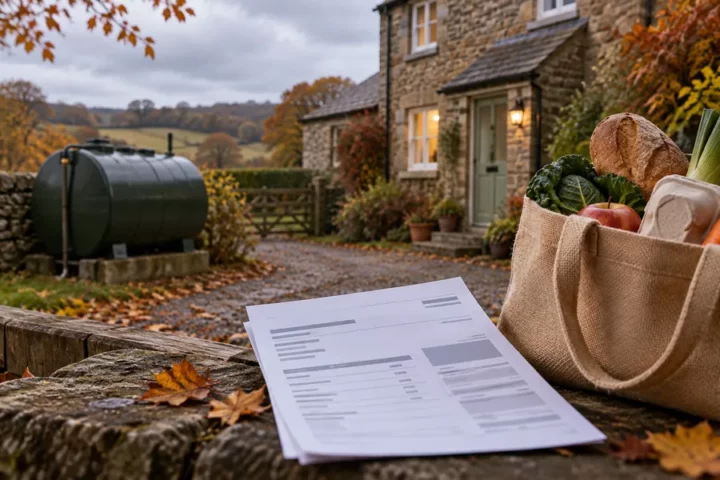
Filling a heating oil tank is putting increasing pressure on household budgets across the UK. According to the BBC, many customers will pay almost twice as much as a year earlier. In a report published on 14 October, Shropshire residents and community organisations describe a problem that goes beyond the price per litre: households also have to find the money for a large fuel purchase in one go.
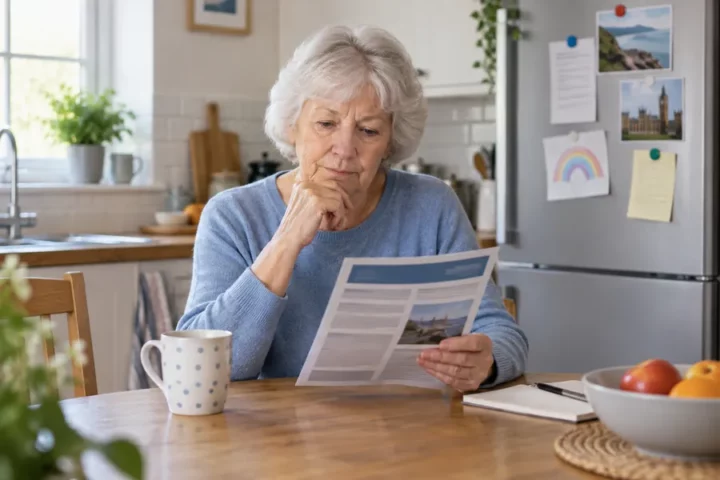
Liz Humphris, from Bishop’s Castle, told the BBC she now orders 500 litres at a time because buying more is too expensive. She pays over £500 for that delivery. This is the amount she reported paying, rather than a national average, but it illustrates the scale of the bill facing a household that heats its home with oil.
Humphris said her teacher’s pension allows her to cover the cost. However, she volunteers at a food bank — which provides food to people in financial difficulty — and knows people with much smaller budgets. In her view, buying fuel means choosing between heating and food for those on very limited incomes.
A large bill with every delivery
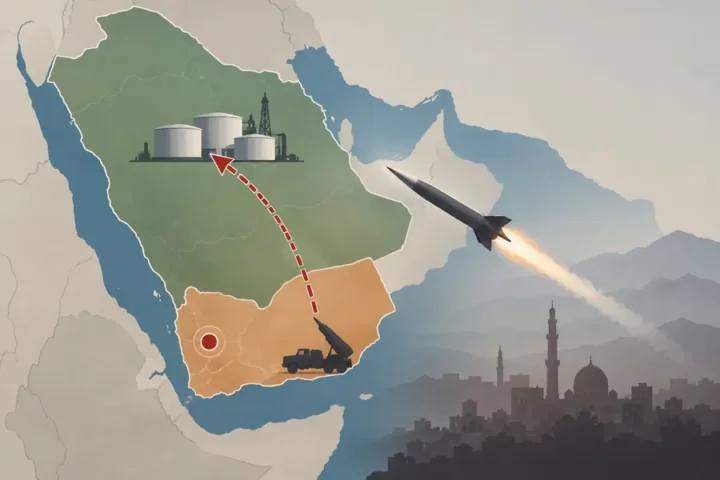
The BBC links the rise in heating oil prices to the period since the war with Iran began. The increases are particularly significant in rural areas, where many homes are not connected to the mains gas network. According to Shropshire Council figures cited by the BBC, around 15% of households in the council’s area use oil-fired central heating, equivalent to between 16,000 and 21,000 properties.
In the South Shropshire constituency, 53% of homes have no access to mains gas. That does not mean all of them use heating oil, but it shows how many residents live beyond the gas network.
Community Resource runs a collective heating oil buying scheme intended to help customers secure lower prices. Hanna Clarke, from the organisation, told the BBC that both the need to buy fuel in bulk and minimum order quantities create difficulties. Even a household needing less oil may therefore face a substantial bill in a single payment.
Government promises changes, but not a price cap
According to the BBC, ministers announced plans on 13 October to tighten market rules, support competition and give customers clearer routes to compensation. A review of minimum order quantities is also planned. These are proposed measures, not rules that have already come into force.
The BBC also stresses that there is no promise of a heating oil price cap comparable to the mechanism covering mains gas and electricity tariffs in England, Scotland and Wales. For oil customers, that is an important distinction: proposed changes to sales rules do not amount to a guaranteed maximum fuel price.
Action with Communities in Rural England (ACRE), an organisation supporting rural communities in England, described the proposals as insufficient. It called for an immediate cut in VAT on heating oil and LPG, or liquefied petroleum gas. That is the organisation’s demand, not an announced government decision.
ACRE chief executive Corrine Pluchino highlighted the position of 1.7 million UK households outside the mains gas network, mainly in rural areas, and the high and volatile prices of fuel bought in bulk. The accounts from Shropshire show why the size of each delivery bill matters alongside the price itself: households have to find the money for heating immediately, from a budget that must also cover everyday essentials.