Contents
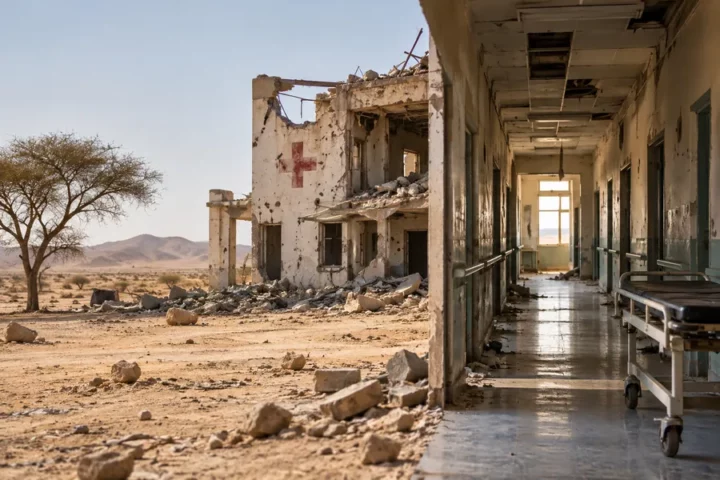
The BBC has documented at least 43 attacks on hospitals and other medical facilities in El Fasher in an investigation into Sudan’s paramilitary Rapid Support Forces (RSF). According to the broadcaster’s findings, the group systematically destroyed local healthcare during its siege and capture of the city in Darfur. The RSF denies the allegations.
Published on 23 October 2026, the investigation sets out a chronology of attacks from May 2024 to October 2025. Rather than reporting a single new strike, it reconstructs how successive facilities stopped providing care to residents.
The BBC based its findings on sources who were in the city. Some facilities were attacked repeatedly. Six doctors interviewed by its journalists described a recurring pattern: attacks allegedly followed medical services to the alternative premises where they had relocated. This forms part of the evidence behind the BBC’s findings of deliberate and systematic destruction of healthcare.
Medical staff killed, injured and abducted
Figures gathered by the BBC show that 120 healthcare workers were injured, 55 were killed and 10 were subjected to enforced disappearance or abduction between April 2023 and October 2025. Those figures cover a longer period than the record of 43 attacks on medical facilities.
According to the broadcaster, Saudi Hospital was El Fasher’s last functioning healthcare facility when the RSF captured the city in October 2025. The findings therefore describe not only deaths and injuries among staff and damage to buildings, but also the progressive loss of residents’ access to treatment.
UN rights chief says attacks may amount to war crimes
UN High Commissioner for Human Rights Volker Türk described the BBC’s findings as deeply disturbing and consistent with his office’s analysis. In comments reported by the broadcaster, he said repeated RSF attacks on civilian infrastructure, including medical facilities, constituted serious violations of international humanitarian law and may amount to war crimes. That is the assessment of the UN human rights chief, not a court ruling on responsibility.
Responding to the BBC, the World Health Organization (WHO) described events in El Fasher as one of the clearest and most serious examples of the war’s impact on healthcare in Sudan.
RSF rejects the findings
Alaa Eldin Nugud, health minister in an administration linked to the RSF, dismissed the allegations as propaganda from the Sudanese army and its allies. He also claimed that South Hospital had been used as a military base. The BBC found no independent evidence supporting that claim, which the Darfur regional authorities denied.
The question of how a hospital is used matters to its protection under international humanitarian law: a facility can lose that protection if it is used for acts harmful to the enemy. In the case of South Hospital, however, the allegation of such use remains unsubstantiated in the BBC investigation.
According to the report, the RSF-backed administration released videos showing Saudi Hospital and Teaching Hospital operating again. The reopening of South Hospital, meanwhile, remains an announcement by that administration rather than a confirmed development.