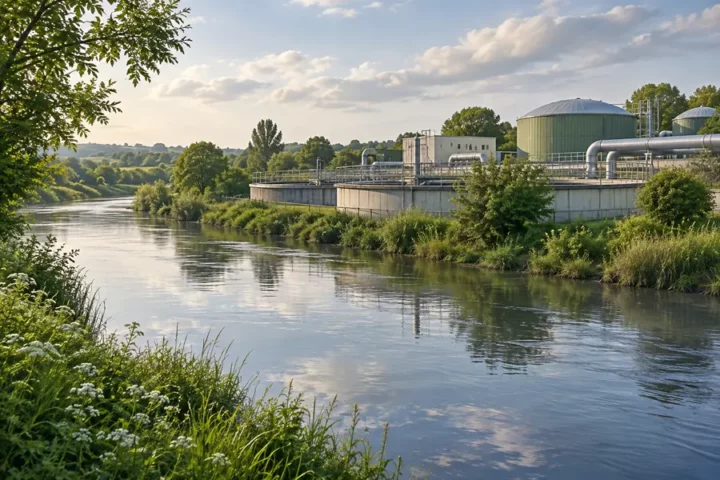
Eight of the nine water companies assessed in England received environmental ratings of “poor” or “requires improvement” for 2025. Only Severn Trent achieved the highest rating. According to the BBC, the first joint report by four regulators shows a further decline in the sector’s performance, although tougher standards also contributed to some lower ratings.
The report, described by the BBC, was published on 29 October 2026 and covers performance in 2025. It was produced by the Environment Agency, its Welsh counterpart Natural Resources Wales, the water industry’s economic regulator Ofwat and the Drinking Water Inspectorate, which oversees drinking water quality.
Companies in England earned just 16 out of a possible 36 stars for environmental performance. According to the Environment Agency’s assessment quoted by the BBC, this was the lowest combined score on record. That does not mean every measure deteriorated to the same extent, or that each of the eight lower-rated companies missed all its targets. The agency identified two factors behind the result: poorer performance in some areas and stricter assessment criteria.
Pollution remains a serious concern
According to the Environment Agency, serious pollution incidents in 2025 remained at similarly high levels to previous years. In Wales, Dŵr Cymru Welsh Water received two out of four stars from Natural Resources Wales.
The BBC reports that £5 billion was invested in tackling pollution over the past five years. However, Environment Agency chair Alan Lovell said not all companies had delivered the improvement programmes for which they had received funding. Spending had therefore not translated into the completion of planned work everywhere.
Industry body Water UK acknowledged that some companies’ environmental performance was not good enough. It also argued that more than half of pollution incidents resulted from blockages or vandalism, which it described as outside companies’ direct control. This is the industry’s position, rather than a finding that absolves companies of responsibility.
Fewer supply interruptions, little change in water use
The picture across the sector was not uniformly negative. Regulators recorded fewer interruptions to water supplies and a long-term reduction in leakage, while stressing that further improvement was still needed in both areas.
According to the joint report, household water consumption in England and Wales averaged 137 litres per person per day in 2025, broadly unchanged from the previous year. For customers, these measures describe different aspects of the water system: a company’s environmental rating, the reliability of supplies and household consumption are not interchangeable. Improvement in one does not automatically mean problems in the others have been resolved.