The European Commission has reopened access to €21.3 billion in unused defence loans under the SAFE programme, according to Euronews. Brussels is encouraging EU governments to use the funding for joint projects with Ukrainian companies. This is not, however, a decision to transfer money to Ukraine: EU member states would be the borrowers, and Ukrainian participation is not compulsory.
According to Euronews, the second application round for Security Action for Europe (SAFE), which finances defence investment, opened on 29 October 2026 and is due to run until 13 November. The €21.3 billion is an unused pool of loans, not additional funding awarded to Kyiv.
Missile defence, drones and ammunition
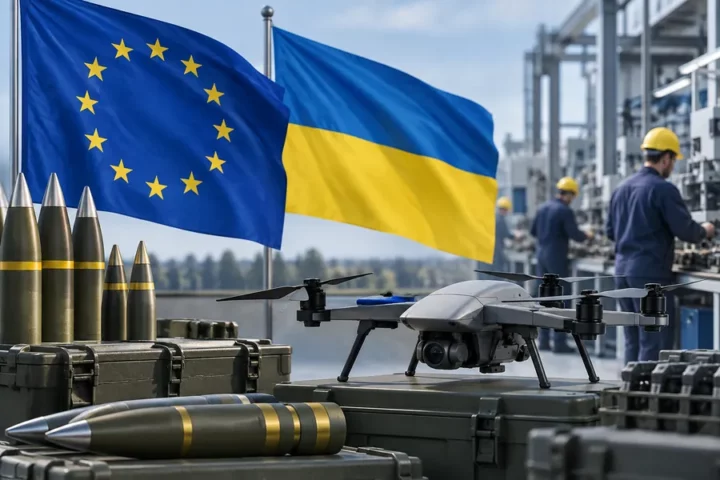
In a letter sent to governments on 29 October, Defence Commissioner Andrius Kubilius highlighted opportunities for cooperation on missile defence systems, drones and ammunition. Euronews reports that Commission defence spokesperson Thomas Regnier confirmed that member states were being encouraged to pursue joint projects that would benefit both their own defence industries and Ukraine.
Whether those projects go ahead will depend on the countries taking up the financing. Under the rules described by Euronews, the Commission cannot require borrowers to involve Ukrainian companies. Neither their participation nor the use of the full reopened loan allocation is therefore guaranteed.
Loans for EU countries, not a direct transfer to Kyiv
The distinction between financing joint projects and providing budget support is crucial. Euronews reports that Ukraine faces a €70 billion budget shortfall. Current rules do not, however, allow the unused SAFE loans to be transferred directly to the country. Any benefits for Ukraine would therefore depend on specific orders and industrial cooperation, rather than an automatic payment from the EU funding pool.
Poland is a major participant in the programme. According to Euronews, it remains SAFE’s largest beneficiary, with €43.73 billion, equivalent to almost 30% of the programme. The new application round gives member states an opportunity to take up the remaining funds, but its launch alone does not establish how much will go towards projects involving Ukrainian companies.