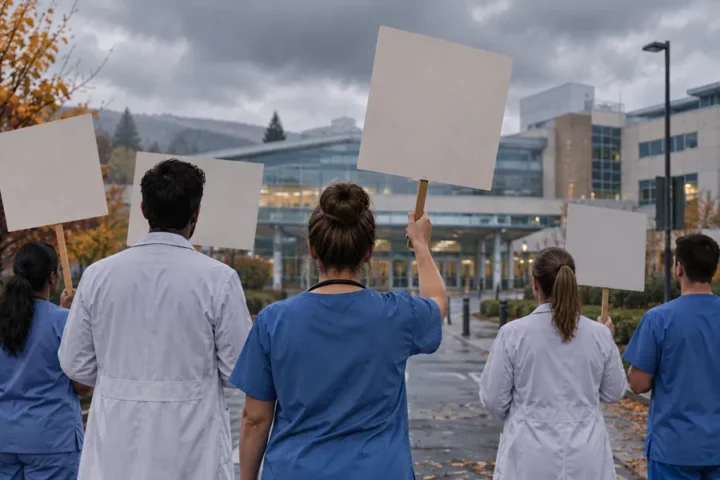
Resident doctors in Northern Ireland began a 24-hour pay strike at 7am on Friday 20 November. According to the BBC, it is their second such walkout in 2026. The British Medical Association (BMA) rejected a recommended 3.5% pay rise and is calling for the restoration of doctors’ pay in real terms.
Resident doctors are qualified doctors undertaking postgraduate clinical training under the supervision of senior colleagues, working in hospitals or GP practices. They are not medical students, but staff involved in patients’ day-to-day treatment.
Pay and retaining doctors at the heart of dispute
BMA members voted for industrial action. The union argues that previous below-inflation pay rises have eroded the purchasing power of doctors’ earnings. It therefore considers the 3.5% increase recommended by an independent pay review body insufficient to address its demands.
Steven Montgomery, chair of the BMA’s Northern Ireland resident doctors committee, also links the pay claim to the need to retain young doctors in Northern Ireland. For the union, the dispute is about both current earnings and keeping staff in the region’s health service.
Health Minister Robbie Butler says he intends to implement the recommended increase. However, he says the absence of a budget at Stormont, Northern Ireland’s devolved government, is preventing him from doing so. His commitment does not mean the pay rise has already been introduced.
Separate walkout planned for Monday
The BBC also reports that a separate 24-hour strike is planned from 7am on Monday. It is due to involve consultants, the most senior specialist doctors, and specialist, associate specialist and specialty (SAS) doctors, a separate group of medical grades.
Under the arrangements announced for Monday’s action, full emergency cover is to be maintained, while most routine and planned care will be cancelled. Those arrangements relate to the forthcoming walkout, rather than describing the effects of the strike that began on Friday.