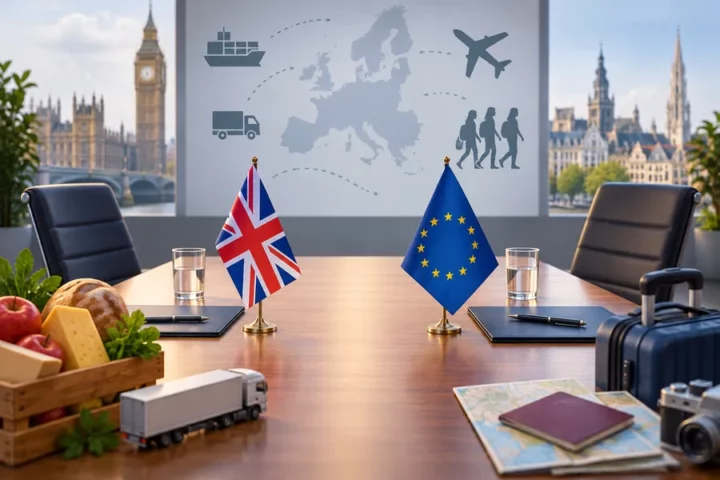
The UK and European Union are negotiating down to the wire ahead of Friday’s summit in Brussels, the BBC reports, citing Downing Street. The talks cover easier food trade, a youth mobility scheme and carbon pricing. No agreement has yet been confirmed.
The government has signalled that it is ready to move quickly on implementing any deal. According to the BBC, the prime minister’s spokesperson said legislation to introduce the changes would be put before Parliament the following week if negotiations succeed. That would not, however, mean the new rules would take effect immediately.
Easier work and travel, but terms remain contested
One proposal under discussion is a scheme that would make it easier for young people to work and travel between the UK and the EU. The BBC reports that significant differences remain: London wants a cap on participant numbers, while the EU is seeking the same university tuition fees for EU students as those paid by domestic students in the UK.
For anyone considering such a move, the scheme’s terms have not yet been agreed. The proposed arrangements are not an existing route to work abroad, and the number of places remains under negotiation.
Less paperwork for food exporters
Another major area concerns businesses selling food to the EU. A potential agreement could remove checks and paperwork for those exports. According to the British government’s case, as reported by the BBC, it could bring £5 billion to the economy and help lower food prices. Those are projected benefits, not results already achieved.
Easier trade could require the UK to follow some EU product rules. The BBC points to labelling requirements and rules on gene-edited crops among the examples. The final scope of any commitments would depend on the outcome of negotiations.
For now, both simpler trade and new opportunities for young people depend on the two sides reaching agreement. The proposed parliamentary timetable signals the government’s readiness to act, but does not establish whether a deal will be struck or when any changes would come into force.