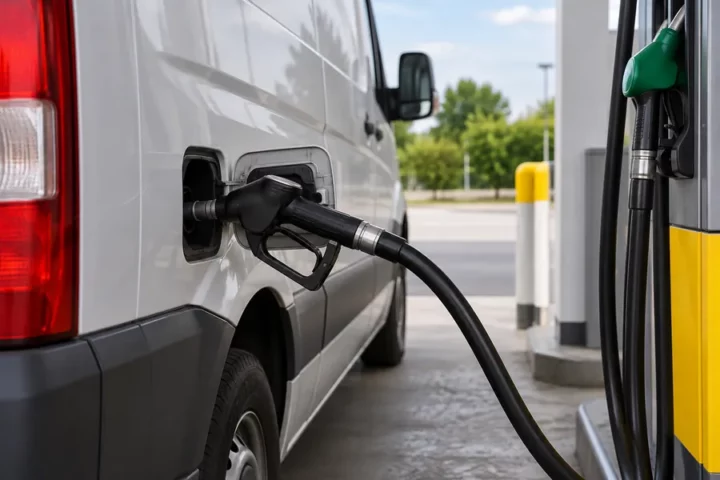
Owners of diesel vans and pick-ups in the UK could spend almost £8.5bn on fuel over the whole of 2026 — around £2.5bn more than a year earlier. That is the estimate from a Moneysupermarket analysis reported by the Guardian on 12 October. The road transport industry is calling for relief and for planned fuel duty increases to be scrapped.
According to Moneysupermarket, the average annual fuel bill for a van could reach £1,965, compared with £1,294 in 2025. The calculation uses typical mileage and fuel consumption, so it does not mean every driver will pay that amount. The figures for the whole of 2026 remain estimates rather than a final tally of spending. Total costs in 2025 were £5.95bn, according to the analysis.
The scale of the increases is particularly significant for delivery transport: the Guardian reports that around 95% of light commercial vehicles still run on diesel. According to the newspaper, the average diesel price at UK filling stations exceeded £2 a litre in October, having risen by more than 40% since the end of February.
Recent price falls have not cancelled out the earlier surge. Figures from the motoring organisation RAC, cited by the Guardian, show that diesel remained around 57p a litre more expensive than before the US–Iran conflict. For petrol, the difference was around 42p.
Industry calls for relief and a halt to duty rises
Higher fuel duty — the UK tax charged on fuel — could add to the cost of filling up. The Guardian describes plans to increase it by 3p a litre from 1 January 2027 and by a further 2p from 1 March, after a rise was postponed from September. These are future changes reported by the newspaper, not rates currently in force.
The Road Haulage Association (RHA), which represents the road transport industry, is urging the government to abandon those increases. It is also calling for relief worth 15p a litre for UK van, coach and haulage operators. This is an industry demand, not support that has been granted.
RHA managing director Richard Smith warns that more expensive fuel and higher duty could put pressure not only on transport businesses but also on households buying the goods they carry. Any resulting increase in shopping costs remains a risk highlighted by the industry — the diesel cost analysis does not establish that this has already happened.