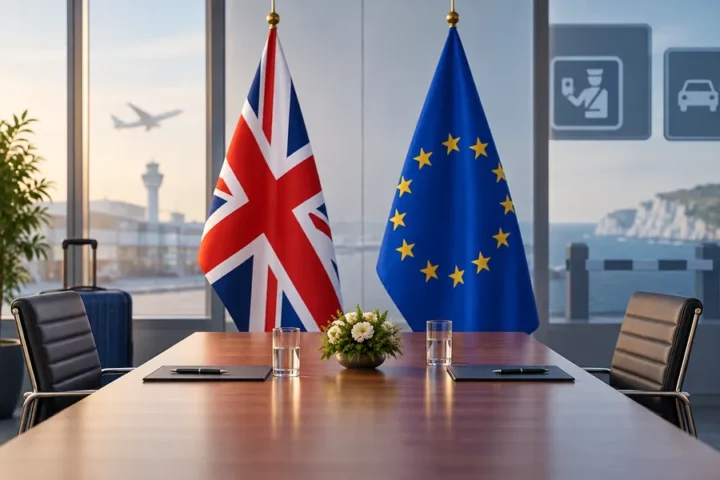
Free movement is expected to be among the options for future UK–EU relations discussed by officials ahead of the summit on 20 November, the BBC reports. That does not amount to a decision to restore it. According to the same report, the prime minister remains committed for this parliament to ruling out a return to free movement, the single market or the customs union.
In its report published on 27 October, the BBC describes Jonathan Reynolds’s comments about talks on the future shape of relations between the UK and the EU. Reynolds said officials would consider different possibilities without making assumptions about the eventual model for that relationship. The suggestion that free movement will be one of the topics comes from the BBC’s reporting, not from an announced agreement.
Food, energy and youth mobility take priority
According to the BBC, Downing Street — the prime minister’s office — stresses that the immediate priority remains agreements covering areas including food and youth mobility. Reynolds identified food and drink, electricity and emissions trading as areas of current discussions ahead of the November summit.
There is therefore a distinction between negotiations on specific issues and a wider discussion about what relations with the EU might look like in future. Talks on youth mobility do not in themselves signal a return to free movement. The BBC does not report an agreed outcome to the negotiations or give an exact date for the start of discussions about future options for cooperation.
No announced change in government policy
The political backdrop also includes Andy Burnham’s position. According to the BBC, he has called for an open discussion about the possibility of restoring free movement.
That is not, however, an announced government policy. The BBC reports that the prime minister is maintaining the commitments in Labour’s 2024 manifesto for this parliament: no return to free movement, the single market or the customs union. Downing Street also clarified that no decision had been made on whether any change involving free movement would require a referendum. No such vote has therefore been announced.
For people following the rules on movement between the UK and the EU, the key distinction is between a topic for discussion and the rules currently in force. The BBC’s reporting concerns possible directions for the future relationship — not an announced change to residence, work or travel rules.